Commercial solar installations give building owners a reliable way to reduce energy costs and stabilize long-term operating expenses.
Energy is one of the largest variable costs in commercial real estate. Solar converts that into a more predictable, controllable line item.
Most systems are designed to generate power during peak daylight hours, when utility rates and demand charges are typically the highest.
How Commercial Solar Systems Reduce Energy Costs
Commercial properties can deploy solar in several ways depending on site conditions:
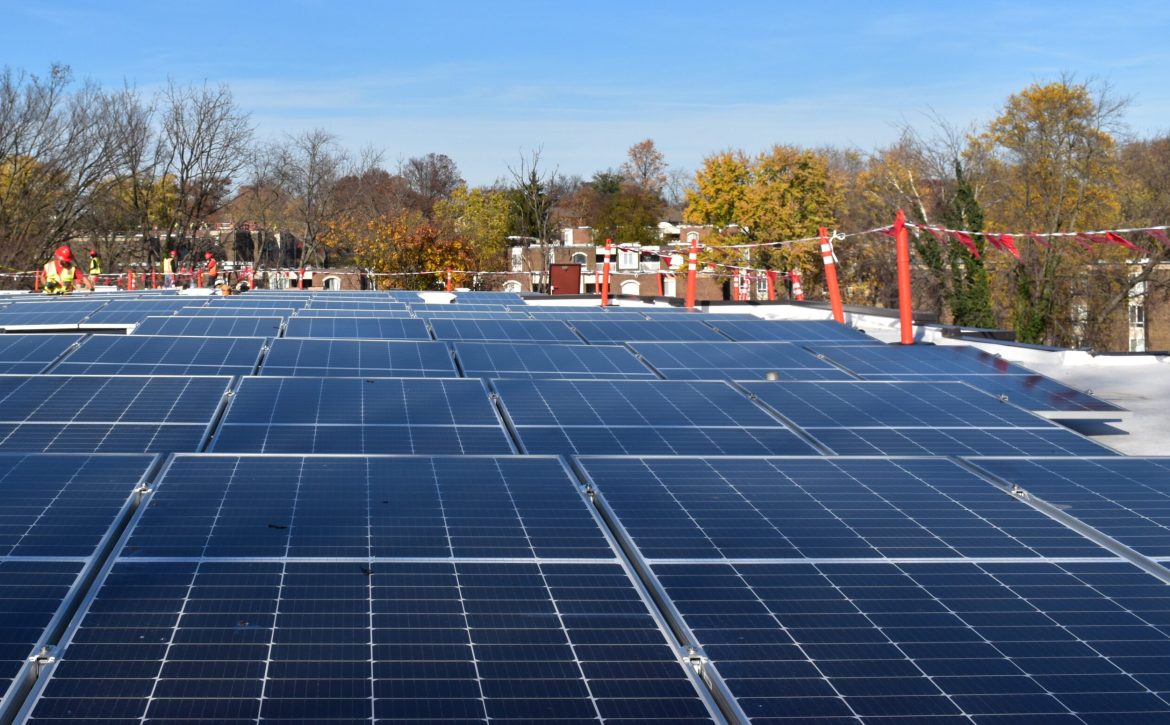
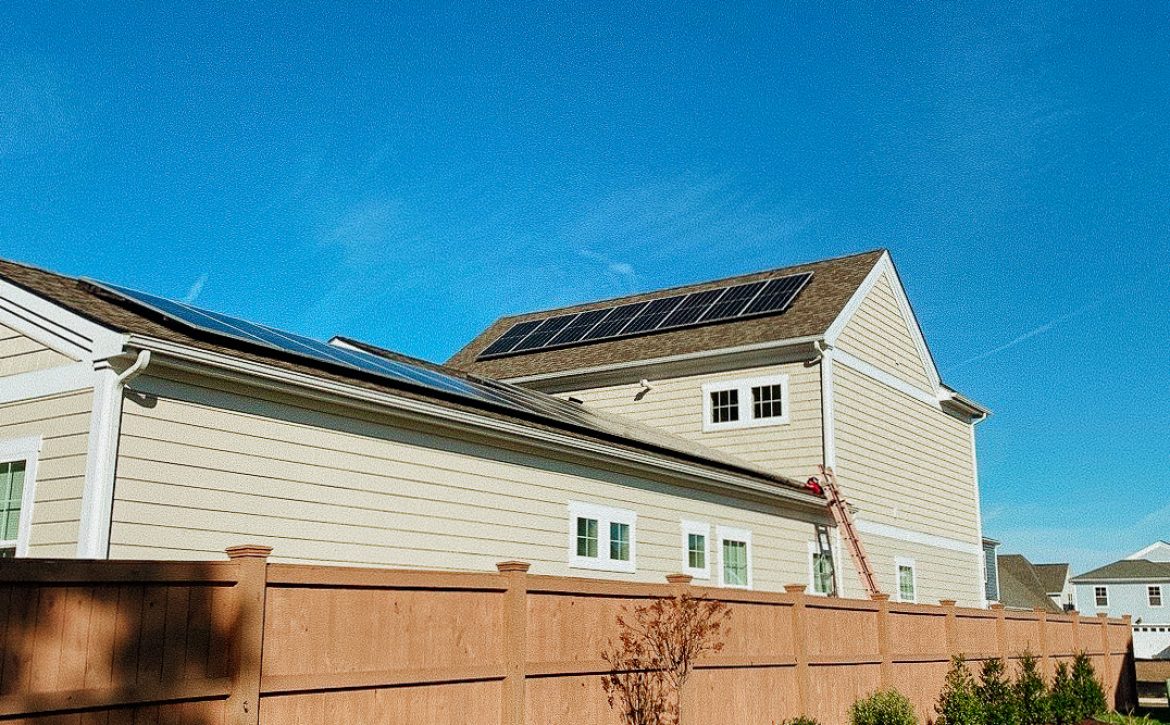
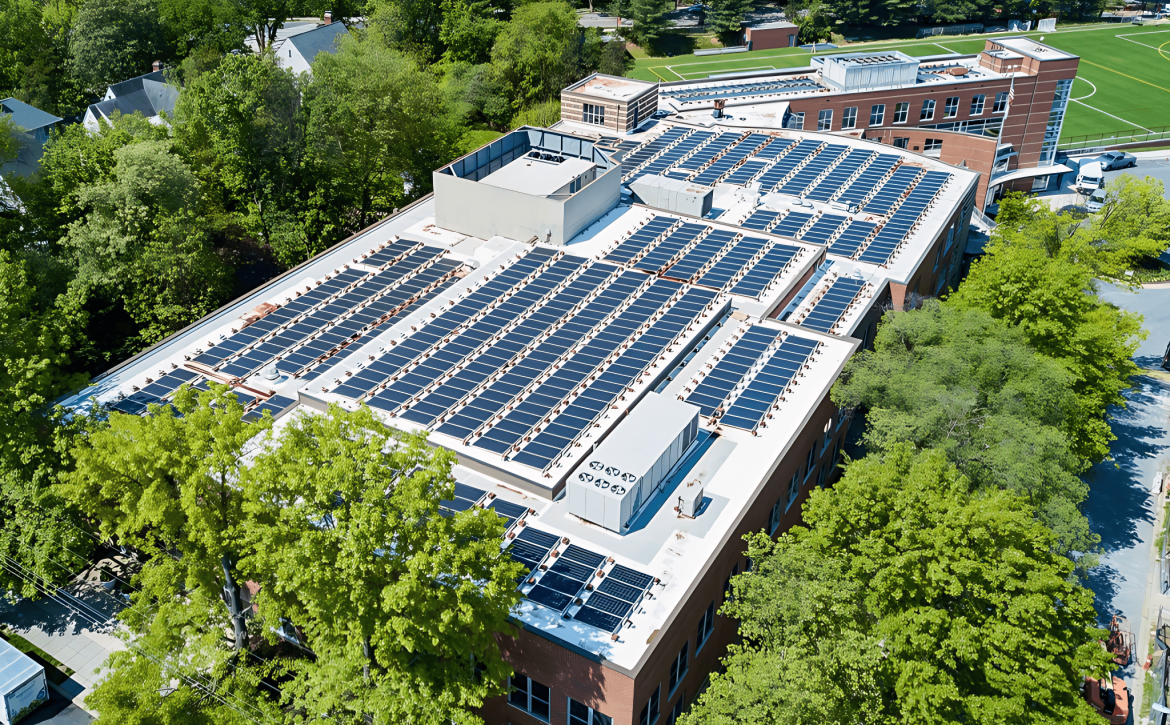
Rooftop systems use existing building space to offset grid electricity
Ground-mount systems maximize production when land is available
Solar carports turn parking areas into revenue-generating assets
Cost reduction comes from:
Lower monthly electricity bills
Reduced peak demand charges
Long-term rate stability over 25+ years
Solar Renewable Energy Credits revenue (SRECs) where available
Net metering credits where available
Key Benefits for Commercial Buildings
From what we’ve seen across projects, the value extends beyond just energy savings.
High-efficiency energy production aligned with business hours
Reduced operating expenses, improving net operating income
Increased property value due to lower risk, higher efficiency, and lower operating costs
Federal Tax Incentives like the Investment Tax Credit (ITC)
Accelerated depreciation through MACRS
Reduced reliance on utility providers
What This Looks Like in Real Projects
At the project level, systems are engineered around actual usage patterns.
Typical ranges:
Small commercial buildings: 50kW to 150kW
Mid-size properties: 150kW to 500kW
Large facilities: 500kW+
Different property types prioritize different outcomes:
Office buildings align solar production with daytime demand
Industrial facilities focus on offsetting high energy consumption
Retail centers often use carports to combine energy and parking improvements
Key Considerations Before Installation
Every commercial solar project starts with a feasibility evaluation.
Structural Integrity: Roofs must be analyzed to confirm they can support panel loads and mounting systems
Roof Condition: Older roofs may need repair or replacement before installation
System Sizing: Based on energy usage, available space, and financial objectives
Energy Storage: Battery systems can store excess energy for peak demand or backup power
Financial Drivers Behind Commercial Solar Adoption
The ROI conversation is usually what moves projects forward.
Immediate reduction in utlity expenses
Federal tax credits reducing upfront cost by a significant percentage
Depreciation benefits improving cash flow
Long-term protection against rising energy prices
In many cases, payback periods fall within a few years, depending on incentives and system size.
Why More Commercial Owners Are Moving to Solar
Energy prices continue trending upward
Investors are prioritizing efficiency and cost control
Tenants increasingly value sustainable buildings
Incentive programs remain strong across many regions
Solar is becoming part of standard asset management, not a niche upgrade.
Take the Next Step
For large-scale, commercial-grade solar projects, organizations can use Solar Energy Services to evaluate, design, and install commercial solar systems tailored to their buildings and financial goals.
Solar Energy Services, Inc. (SES) is equipped to complete projects of all sizes and scopes, from single-site installations to large multi-property portfolios.
Quick Answer: What Solar Incentives Are Available in Maryland in 2026?
In 2026, Maryland solar incentives are centered around the Maryland Solar Access Program (MSAP), which offers grants up to $7,500. Homeowners can also benefit from Solar Renewable Energy Certificates (SRECs), a 6% sales tax exemption, and local property tax credits (Anne Arundel County). While the federal 30% residential tax credit has expired, Maryland introduced a Bridge Fund to help offset that gap.
**As of April 15, 2026, 99% of MSAP funding is reserved for approved projects. Remaining availability is extremely limited and may already be tied to applications in process. The application is open until June 5, 2026 or until funding is exhausted, whichever comes first. Additional funding or a future program cycle is anticipated, though no official announcement has been released.
Top 2026 Maryland Solar Incentives
Maryland Solar Access Program (MSAP) Provides $750 per kilowatt (kW) of installed DC capacity, with a maximum grant of $7,500 for eligible homeowners. Funding is first-come, first-served through June 2026. Eligibility includes income limits that vary based on household size.
Maryland Solar Access Bridge Fund A 2026 program designed to replace the value of the expired federal Residential Clean Energy Credit for qualifying homeowners, helping maintain greater financial viability for residential solar projects.
Solar Renewable Energy Certificates (SRECs) Maryland homeowners can earn and sell SRECs based on system production. Typical lifetime value can reach around $3,000 to $4,000, depending on system size and market pricing.
Sales Tax Exemption Solar equipment is exempt from Maryland’s 6% sales tax, reducing upfront installation costs immediately.
Property Tax Exemption Solar installations do not increase property taxes. Some counties may also offer additional credits.
Local County Incentives
Anne Arundel County Offers a one-time tax credit up to $2,500 for solar systems.
Baltimore County Provides up to $5,000 for residential solar installations through the Energy Conservation Devices Tax Credit, though availability may depend on demand. Applications are not accepted after June 30, 2028.
Recent & Limited-Time County Programs
Some county-level programs are offered on a limited or pilot basis and may not always be active.
Prince George’s County Solarize Program (Solar Energy Grant) Prince George’s County has previously offered Solarize-style programs that provide additional grant funding towards a residential solar system.
The most recent application window has closed as of February 2026
These programs are typically time-bound and fill quickly
Similar programs may be introduced again in future funding cycles
Important Notes for 2026
Federal Credit Changes The 30% Residential Clean Energy Credit (ITC) is no longer available for direct residential ownership.
System Requirements To qualify for MSAP funding, systems must be installed by contractors approved by the Maryland Energy Administration (MEA). Funding is available on a first-come, first serve basis. Solar Energy Services is an MEA-approved contractor, meaning our projects meet program requirements for eligibility.
MSAP Funding Status (As of April 15, 2026)
As of the latest update from the Maryland Energy Administration:
99% of MSAP funding is reserved for approved projects
Remaining availability is extremely limited and may already be tied to applications in process
The program is expected to run through June 2026. At this time:
No official announcement has been made regarding renewal or additional funding
Future program availability remains uncertain
Who Qualifies for Maryland Solar Incentives?
Eligibility varies by program, but most incentives apply to:
Homeowners installing solar systems in Maryland
Households meeting income requirements for MSAP
Property owners working with MEA-approved solar contractors. Solar Energy Services is an MEA-approved contractor, meaning our projects meet program requirements for eligibility.
From a project standpoint, qualification often comes down to timing, contractor alignment, and program availability.
Next Step: Understand What’s Still Available
Solar incentives in Maryland are changing quickly, and availability can shift based on funding, location, and program requirements.
Our team works directly with current state and county programs and can walk you through:
What incentives are still available today
How MSAP status impacts your project
Which local credits or programs may apply to your property
Connect with our team to review your options and get the most up-to-date guidance based on your location and eligibility.
As of 2026, the federal solar tax credit is not available for directly owned residential systems. Solar and battery storage still offer strong value, helping homeowners reduce dependence on the grid, maintain power during outages, and create more predictable long-term energy costs.
Incentives and policies can change, and new programs may become available at the federal, state, or local level.
Are solar incentives still worth it in Maryland in 2026?
State programs like MSAP, along with SRECs and tax exemptions, continue to support solar adoption, though availability for some programs is now limited.
What happens if MSAP funding runs out?
If MSAP funding is fully allocated, applications pause until the next cycle. Our team tracks program availability and helps homeowners identify other incentives, as well as plan around future funding opportunities.
Commercial real estate energy strategy is how property owners gain control over long-term operating costs through on-site generation, efficiency upgrades, and infrastructure planning.
Across Maryland and the broader Mid-Atlantic, this is already happening at the project level. Owners are making practical decisions to stabilize expenses, improve asset performance, and reduce exposure to rising utility rates. These decisions are showing up in both retrofit projects and new construction.
How Energy Strategy Shows Up in Real Projects
On recent projects, energy is being addressed earlier in the planning process and tied more directly to financial performance.
Property owners are:
Locking in a portion of future energy costs
Reducing exposure to utility rate increases
Converting existing building surfaces into energy-producing assets
Improving predictability in underwriting
Energy is being evaluated alongside capital improvements and long-term asset planning, not treated as a separate line item.
What Energy Strategy Looks Like in Practice
Energy strategy is about controlling long-term operating costs and improving how a property performs over time.
In execution, that typically includes:
Integrating solar into planned roof replacements or new construction
Using available land or roof space for on-site generation
Aligning energy investments with capital improvement cycles
Designing systems that support long-term operational stability
From a financial standpoint, this creates more predictable expenses and supports stronger asset performance over time.
Case Study: Seneca Village
Project Overview
Maryland retrofit project featuring a 2.18 MW rooftop solar system
What Was Implemented
Reflective roofing system to improve building efficiency
Rooftop solar array for on-site energy generation
Owner Priorities
Reduce long-term operating expenses
Improve building efficiency
Increase overall asset performance
Execution
The roof replacement was coordinated with the solar installation to maximize system lifespan and avoid future rework. This alignment improved overall project efficiency and return on investment.
Outcome
Immediate reduction in energy costs through on-site generation
Improved building performance from reflective roofing
More predictable long-term operating expenses
This approach allowed the owner to upgrade an existing asset while addressing both cost and performance in a single project.
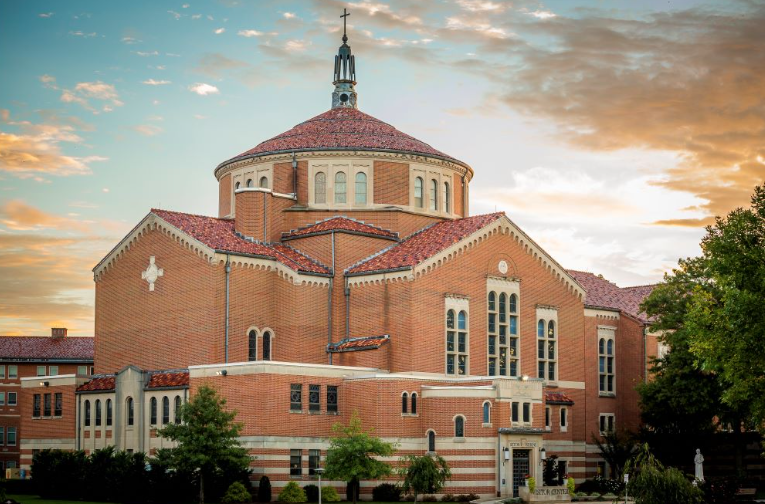
Case Study: National Shrine of Saint Elizabeth Ann Seton
Project Overview
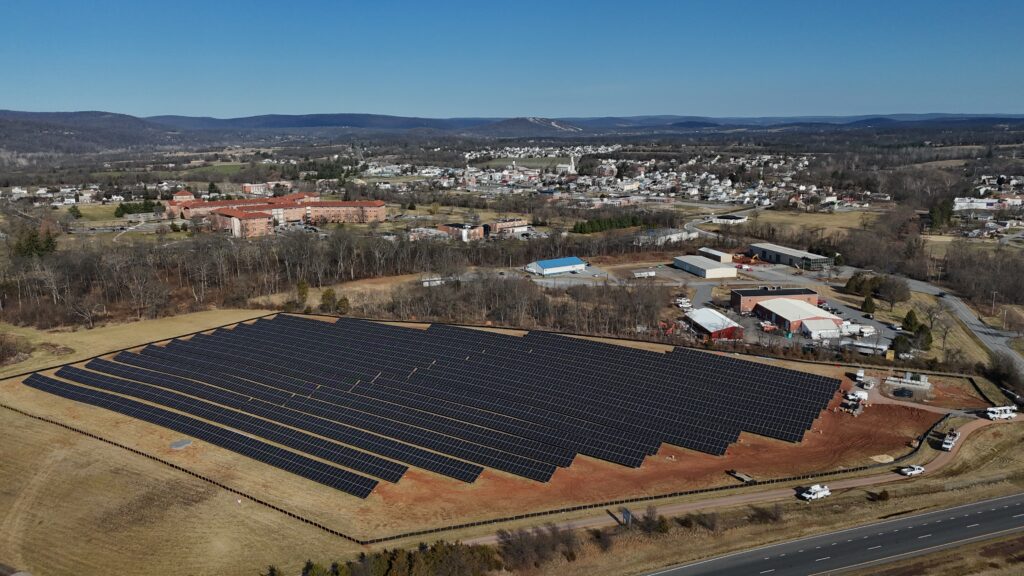
Emmitsburg, Maryland ground-mounted solar project, 2.65 MW system currently under construction in partnership with Mission Energy
What Was Implemented
Large-scale ground-mounted solar array
Use of available land for energy production
Owner Priorities
Offset a significant portion of energy demand
Create long-term cost stability
Invest in durable infrastructure
Photo by: Mission Energy Inc.
Execution
The project leverages available land to support a high-output system designed for long-term performance. System design focused on maximizing production to support campus-wide energy needs.
Outcome
Significant on-site energy generation supporting facility operations
Reduced reliance on grid-supplied electricity
Long-term cost stabilization for a large campus environment
For properties with available land, this model converts underutilized space into a high-value, energy-producing asset.
What’s Changing in Conversations With Property Owners
The shift is most noticeable in how conversations start.
Previously, discussions focused on:
What does solar cost?
What is the payback period?
Now, property owners are asking:
How do we stabilize operating costs?
How exposed are we to future utility increases?
Where can we create more control within this asset?
These questions lead to different project outcomes. Energy decisions are happening earlier and are more closely tied to financial strategy.
How Property Owners Are Using Solar Today
Property owners are typically using solar in three primary ways:
1. Cost Stabilization
Locking in a portion of energy costs to reduce exposure to rate increases.
2. Asset Optimization
Upgrading existing buildings to improve efficiency while generating energy, as seen in retrofit projects like Seneca Village.
3. Long-Term Infrastructure Planning
Designing systems that support ongoing operational needs, as demonstrated by large-scale projects like the National Shrine.
Each approach directly impacts both financial performance and day-to-day operations.
What This Means for Commercial Property Owners
For owners evaluating their portfolios, the opportunity is tied to existing assets and planned improvements.
A few starting points:
Which properties have the highest energy cost exposure?
Where can existing structures support solar installation?
How does energy factor into long-term financial planning?
Are there upcoming capital improvements that could align with energy upgrades?
Projects tend to perform best when energy strategy is aligned with planned upgrades, rather than treated as a standalone decision.
Commercial Solar in Maryland and the Mid-Atlantic
Across Maryland, Washington, DC, and Virginia, energy is becoming a consistent part of how commercial properties are evaluated and managed.
It is influencing:
Capital improvement planning
Asset repositioning strategies
Long-term operating cost management
Tenant expectations and competitiveness
This is already shaping how portfolios are planned and executed across the Mid-Atlantic.
Explore Energy Strategy for Your Portfolio
Solar Energy Services works with property owners, developers, and asset managers across Maryland, Washington, DC, and the Mid-Atlantic to identify where energy strategy can improve asset performance and cost predictability.
Start the conversation and see where this approach fits within your portfolio.
Solar Energy Services will design and install solar energy systems for three new construction projects across Maryland, Washington, D.C., and Northern Virginia. The projects include the University of Maryland School of Social Work building in downtown Baltimore, the Wagner Senior Residences in Washington, D.C., and the Patrick Henry Library and Garage in Vienna, Virginia, bringing more than 336 kW of new commercial solar capacity to public and community infrastructure across the region.
With decades of experience designing and installing solar energy systems across Maryland, Washington, D.C., and Virginia, Solar Energy Services has become a trusted partner for architects, developers, and general contractors seeking to integrate solar into complex commercial projects.
University of Maryland School of Social Work – Baltimore, Maryland
Solar Energy Services will design and install a 132.70 kW rooftop solar system for the new University of Maryland School of Social Work building in downtown Baltimore. The building is expected to feature Baltimore’s first green roof, integrating renewable energy generation with sustainable roof design.
Working alongside Whiting-Turner, the project’s general contractor, Solar Energy Services will integrate the solar system into the building’s broader sustainability strategy. The project highlights how solarized green roofs can support urban sustainability goals while improving building performance and energy resilience.
Solar Energy Services will install a 32.45 kW rooftop solar system at Wagner Senior Residences, a new affordable senior housing development currently under construction in Washington, D.C. The project is being developed by Donohoe Construction.
The solar installation will work alongside green roof infrastructure to help offset building energy consumption while supporting long-term sustainability for the residential community. Integrating solar into multifamily developments is becoming an increasingly important strategy for reducing operating costs and improving energy efficiency in new housing projects.
Solar Energy Services is designing a 171.1 kW rooftop canopy solar system for the Patrick Henry Library and Garage project in Vienna, Virginia. The project is being developed by Costello Construction.
The rooftop solar canopy will generate renewable electricity while providing covered parking for library visitors, demonstrating how solar energy systems can be incorporated into civic infrastructure to improve both energy resilience and public amenities. Solar canopies are an increasingly popular solution for municipal and institutional buildings looking to expand renewable energy generation without impacting existing roof space.
Solar Energy Services specializes in the design, installation, and service of residential and commercial solar energy systems across Maryland, Washington, D.C., and Virginia. With decades of experience and thousands of completed installations, we work with developers, property managers, general contractors, and homeowners, to integrate solar energy into both new construction and existing buildings.
SES has extensive experience supporting commercial and residential solar projects, solarized green roofs, ground-mounted solar systems, and complex rooftop installations throughout the Mid-Atlantic region. Solar Energy Services frequently partners with developers, architects, and general contractors to integrate solar energy into new construction projects, including civic buildings, multifamily housing, institutional facilities, and homes.
Solar Energy Services also operates one of the longest-running solar operations and maintenance (O&M) service departments in the region, providing inspections, system maintenance, troubleshooting, and technical support for solar systems regardless of the system size or the installer.
If you’re like most solar shoppers, you prefer two or three bids on a substantial home improvement project, enabling you to sanity-check pricing, design options, and find the overall best contractor fit for your needs and desires. Included in these comparisons is the Warranty. Most solar systems come with 3 warranties:
Solar module (panel) manufacturer’s warranty: typically 25 to 30 years
Inverter(s) manufacturer’s warranty: usually 10 to 25 years (inverters convert DC energy to usable AC energy)
Workmanship warranty: Think of this as our promise to stand behind our work. While product and manufacturer warranties protect the equipment itself, our workmanship warranty protects how it’s put together, from the design to the final installation. If an issue comes up because of the way we installed it, we’ll make it right, (at no cost to you?), for the full coverage period we guarantee. It’s our way of making sure you feel confident long after the job is done.
The Industry Standard
As the popularity of solar has increased, so has the number of competing contractors. All solar contractors should include a workmanship warranty in their proposals. What will differ is the length of the workmanship warranty. Until recently, the standard workmanship warranty for a residential solar system was between 5 and 10 years. Then, a few years ago, some contractors began offering an eye-catching 25-year workmanship warranty. Sounds amazing, right? On paper… absolutely. But as with most things, the details matter, and the fine print can tell a very different story.
Compete Only to Beat
The truth is, a 25-year workmanship warranty is only as good as the company behind it. If the contractor goes out of business, that warranty goes with them. No matter how impressive it looked in the sales pitch. With over 40 years in the solar industry, it’s fair to say we’ve seen a lot of solar installers come and go, especially in the last five years. The “going” usually brings with it a slew of phone calls to our service department as solar system owners panic about no longer having their contractor around to honor the workmanship warranty, particularly those looking to resolve existing issues. Ironically, these are sometimes homeowners who chose that contractor over us due to a difference in the duration of the workmanship warranty offered. We have stuck with the industry-standard of 10 years, whereas some other installers have increased to 25 years to match the manufacturer’s warranties.
So, the big question – and the reason for this current article is – Why? If some of our competitors are offering a 25-year warranty, why don’t we? Seems only natural, given the fact that we’ve been in business for longer than 99% of them – greatly increasing the probability that we’ll be around to honor an workmanship warranty.
The Big Answer (In Two Parts)
We’re Keeping it Real: Understandably, a 25-year workmanship warranty is attractive to a homeowner because – by design – it matches the 25-year solar panel warranty. This does not change the fact that a workmanship warranty exists entirely independent of the installed equipment warranty(s). What really matters is the installer’s track record, financial stability, and commitment to standing behind their work for the long haul. Given this, we avoid inflating the language in our contracts to provide misleading comfort to a home or business owner, with the sole purpose of beating out the competition at contract-signing time.
We’re Still Keeping it Real: Of all the orphaned solar projects we’ve come across – we cannot cite a single known instance where a homeowner has taken legal action over an abandoned workmanship warranty item; it’s simply not worth the court fees or the hassle. Most exert their energy on finding a contractor who will fix the problem as soon as possible and get their solar system restored to full working condition. Hence, the true value of the workmanship warranty is contractor integrity and the likelihood of whether they both intend to and actually do remain in business to honor their contractual agreement. For most solar contractors, the standard ten-year commitment reflects a realistic forecast of longevity and commitment, avoiding the temptation to head off into fairytale land to beat out the competition.
When you’re ‘going solar’, one of the biggest technical choices you’ll make is between a string inverter and microinverters. That decision affects your system’s efficiency, cost, and long-term performance. The better option is entirely unique for each customer, it depends on your roof’s orientation, design, shading, etc.
Monitoring — how you track your system’s production — comes bundled with whichever inverter type you choose. While some customers love ultra-detailed data from panel-level monitoring, for most homeowners, the simpler string-level monitoring is more than enough to ensure their system is performing well.
At SES, we’ve been maintaining solar systems longer than anyone in the region. Our service department supports all systems, whether we installed them or not, offering cleanings, inspections, diagnostics, repairs, replacements, and even remote monitoring. No matter which inverter you choose, we’re here to keep your solar system running at its best.
Option 1: String Inverter (Example: Tesla Solar Inverter)
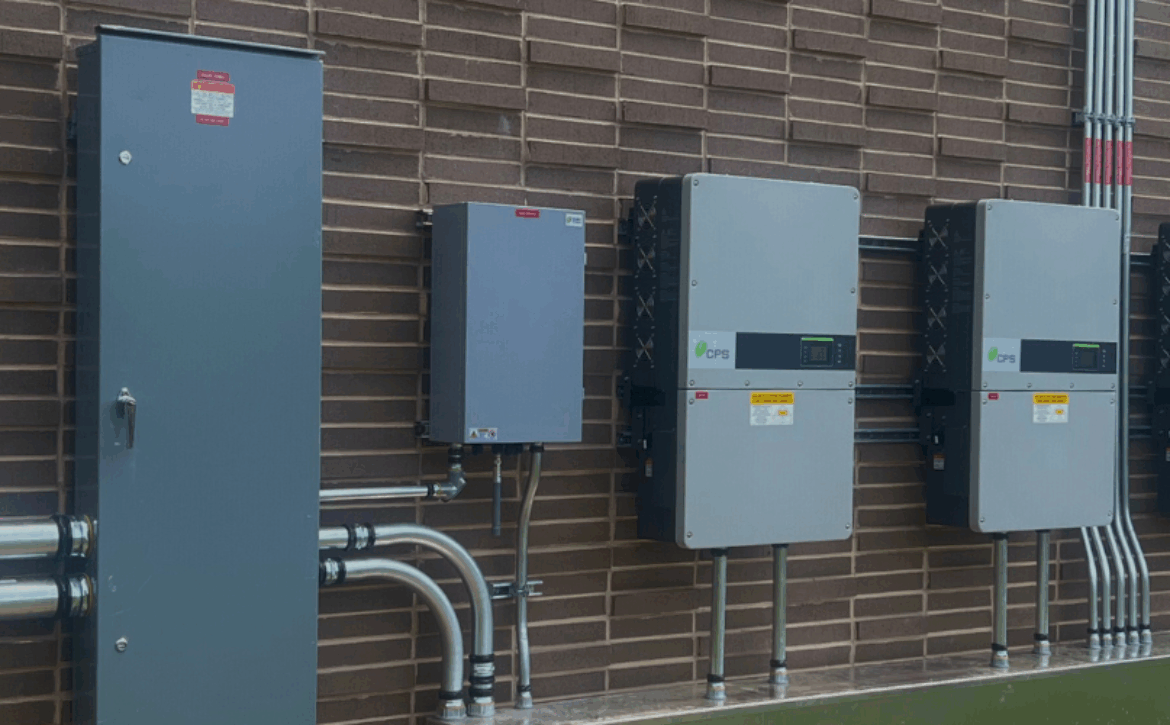
String inverters manage power from a “string” of connected solar panels. Most string inverters are designed to support several strings of panels. They provide system-level monitoring, a simple, cost-effective way to see how your solar investment is performing overall. The Tesla Solar Inverter, a common example of a high-quality string inverter, offers system-level monitoring.
Advantages:
More budget-friendly than microinverters.
Reliable, proven technology.
Easy to see your system’s total production.
Fewer system components.
Considerations:
No individual panel performance data.
One underperforming panel can slightly reduce the output of its string.
Tesla string inverters do not support automatic SREC reporting. Monthly readings must be submitted manually.
Best Fit: A great choice for homeowners who want reliable, cost-effective solar performance tracking, have simple roof layouts with minimal shading, and prefer an easy way to monitor their system’s overall production without diving into panel-by-panel details.
With microinverters, each panel operates independently and reports its own data. You can see exactly what each panel produces at any moment.
Advantages:
Pinpoint an underperforming panel instantly.
One panel’s issue won’t affect others.
Detailed, panel-by-panel performance tracking for those who love having deeper insights into their system.
Considerations:
Higher upfront cost.
More components to maintain.
Best Fit: Homeowners who want the deepest insights into their solar system’s performance, have roof layouts with shading or complexity, and value being able to quickly pinpoint and fix issues at the individual panel level. This option is also well suited for those willing to invest more upfront for enhanced monitoring and long-term optimization.
Choosing the Right Monitoring Option for You
Consider your specific needs and circumstances when deciding between string-level and panel-level monitoring. If you prioritize a cost-effective solution and have a relatively unshaded roof, string inverter monitoring will likely provide the essential information you need to ensure your system is operating correctly.
However, if you desire detailed insights into individual panel performance, have a complex roof layout with potential shading issues, or want the ability to pinpoint and address underperforming panels quickly, then panel-level monitoring is a valuable investment.
Your solar and storage consultant can help you assess your specific situation and recommend the monitoring solution that best aligns with your needs and budget.
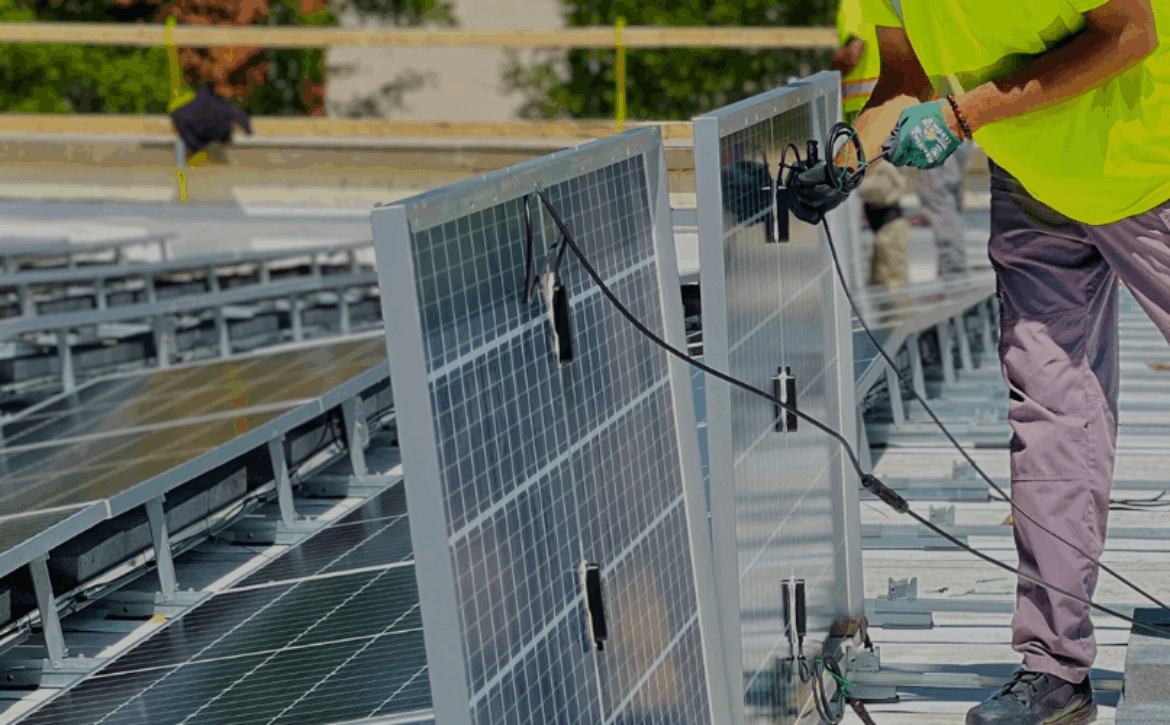
At SES, our commitment to craftsmanship isn’t just a value – it’s in the center of just about everything we do. This core value shines brightly in all aspects of our work, perhaps most visibly in the field, as beautifully seen in the photos of our work.
The clean lines and meticulous execution seen in these images are a testament to the dedication and expertise of our field teams. But craftsmanship at SES extends far beyond what meets the eye on a project site. It is the meticulous attention to detail that is woven into every stage of our work: in our designs, in our customer communications, in our creative, and in all of our “behind the scenes”. While one person can have great craftsmanship, it is often and mostly delivered not just by one, but by a team.
Our project photos serve as a powerful example of this core value. The impressive work in the field is a direct result of careful planning, clear communication, and dedicated effort by everyone on the jobsite. It’s a reminder that craftsmanship isn’t just a skill, it is a mindset that permeates our entire organization.
We all take pride in the craftsmanship we bring to our work each and every day, in every role here at SES. It’s what sets SES apart and ensures we continue to deliver energy systems that are not only powerful but also are built to last.
Solar + Battery Storage provides homeowners and business owners with much-needed energy independence in the face of disruptions of an aging power grid. When your solar panels collect energy from the sun, the energy is then sent to your inverter, which converts that power into usable AC electricity. The AC electricity powers your lights, appliances, and devices. But what happens when you experience an outage? Here’s where your battery comes into play: this is when you will begin to pull electricity from your battery until power is restored. The solar will then recharge the battery until it is full in preparation for another outage. Depending on your battery and energy usage, you can have a whole-home backup, or you can just target your essential loads. Pairing solar panels with a battery ensures your home or business stays operational during a grid outage, providing peace of mind and reducing reliance on an uncertain grid. Now, let’s get down to the details.
Grid-Tied Solar Systems
Grid-tied solar systems are a great way to save money and create an energy-efficient home. These are by far the most common solar energy systems in our region. Without an integrated battery, these systems automatically shut off during a grid outage to prevent back-feeding electricity into the grid, which can be dangerous for utility workers. When your grid-tied system is paired with a battery, it will automatically ‘island,’ (disconnect from the grid) allowing you to operate your own micro-grid during the outage, leveraging the value of both your solar system and your battery to carry you through. When you aren’t experiencing an outage, under normal operating conditions, your battery will stay fully charged by the solar, with any excess energy sent back to the grid to be consumed by the nearest load (likely one of your neighbors), giving you kWh credits for any export of energy. Net Metering in our region allows you to receive full retail credit on your utility bill for every kWh you send to the grid.
Off-Grid Solar Systems
Off-grid solar power operates independently from the electricity grid. It is less common in our region and is typically used in remote areas where grid connectivity is cost prohibitive. These solar systems are completely self-sufficient, relying on solar panels to capture energy from the sun, to be both stored in on-site batteries and used in real time. A well-designed system with the right technology ensures dependable electricity through the use of only renewable energy resources.
How to Choose the Right Solar Battery
Each solar system is unique, and your battery system is no exception. Selecting the ideal battery for your home or business isn’t just about technical specifications. Our experts will guide you in choosing a solution that aligns with your unique needs, considering factors like your lifestyle, energy consumption, essential appliances, existing electrical system, and budget. We’ll walk you through our top 3 solar-battery picks.
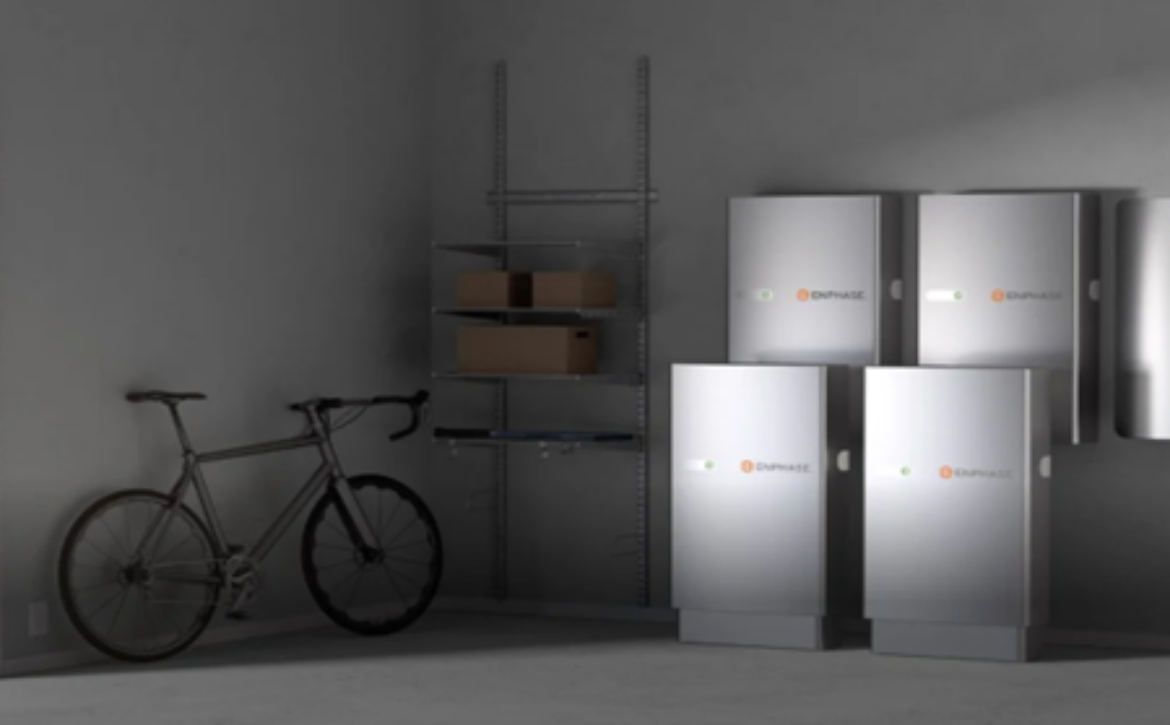
Enphase IQ8 5P
The IQ8 5P from Enphase allows homeowners to start and run more power-hungry appliances during an outage than ever before (think refrigerators, freezers, sump pumps, well pumps, and water heaters). These batteries are National Electrical Manufacturers Association (NEMA) Type 3R rated, meaning that they can withstand and will operate in extreme weather conditions including heavy rain, sleet, snow, and ice.
Technical Specifications:
Capacity: 5 kWh
Peak Power: 3.84 kW continuous / 7.68 peak
Chemistry: Lithium-ion LFP (Lithium Iron Phosphate)
Efficiency: Up to 97%
Key Features:
Modular design for scalable storage solutions (add more batteries as your energy needs grow over time)!
Individual monitoring and control of each battery
Built-in microinverters for optimal energy production
Compatible with Enphase solar systems
Seamless generator support during extended outages
15-year warranty
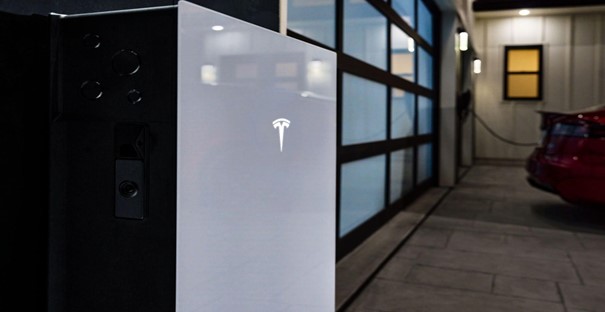
Tesla Powerwall 3
The Powerwall 3 is a streamlined, all-in-one solution for energy storage. Its integrated design reduces complexity, improves efficiency, and simplifies installation and management. With a single monitoring platform, you can easily track solar production, consumption, EV charging, and battery usage. Powerwall 3’s compact size and integrated solar inverter ensure reliable whole-home backup, even in harsh conditions. In the event of a power outage, it seamlessly transitions your home to stored energy, providing a continuous and uninterrupted power supply.
Technical Specifications:
Capacity: 13.4 kWh
Peak Power: 11.5 kW continuous / 30 kW peak
Chemistry: Lithium-ion LFP (Lithium Iron Phosphate)
Efficiency: Up to 97.5%
Key Features:
Integrated inverter for grid-tied and backup power capabilities
Advanced thermal management system
Remote monitoring and control via mobile app
Compatible with most major solar inverters
Modular design for scalable storage solutions
10-year warranty
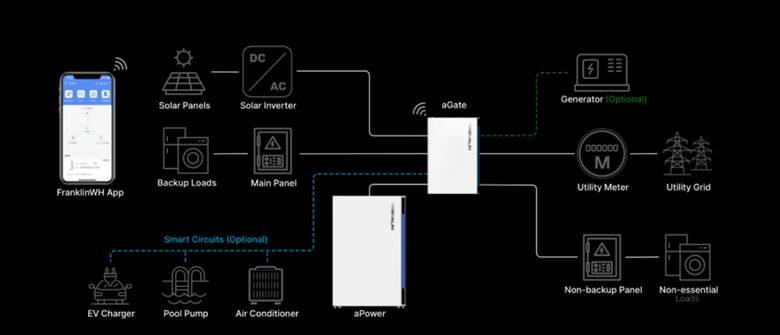
Franklin WH aPower Battery + aGate Energy Management
aPower paired with aGate by Franklin WH, a robust home energy battery solution, offers scalable storage as well. aPower batteries can be scaled up to 15 units per aGate, offering a remarkable 204 kWh of storage to meet even the most demanding home energy needs. As a robust battery, a single aPower unit is powerful enough to start a 4-ton air conditioner.torage. aPower batteries can be scaled up to 15 units per aGate, providing up to 204 kWh of storage.
Technical Specifications:
Capacity: 13.6 kWh per unit
Peak Power: 5 kW continuous / 10 kW peak
Chemistry: Lithium-ion LFP
Efficiency: Up to 95%
Key Features:
Customizable storage options to suit different needs
Integrated battery management system for safety and performance
Compatibility with various solar inverters
Competitive pricing with a 12-year warranty
Federal Tax Credit for Solar Batteries
The solar battery tax credit is part of the federal solar tax credit, a long-standing incentive for solar panel installation. In 2022, the solar tax credit was expanded to include both stand-alone and solar paired with battery storage as part of the Inflation Reduction Act. The new and improved tax credit is often referred to as the solar battery tax credit when it’s being applied to battery storage. This credit can be combined with the federal solar tax credit to maximize savings and can stand alone, without solar. There is no maximum amount for claiming your tax credit.
MEA – Maryland Energy Storage Income Tax Credit
The Maryland Energy Administration Storage Income Tax Credit is available to residential and commercial taxpayers who have installed an energy storage system on their property in Maryland. Tax credit certificates are awarded on a first come, first served basis. We are currently awaiting 2025 program information from MEA. Tax Credit Calculations Energy storage tax credit certificates are calculated differently for systems installed on residential and commercial properties. A tax credit certificate is calculated as the lower amount of: ● 30 percent of the total installed costs of the energy storage system; or, ● $5,000 for an energy storage system installed on a residential property; or, ● $150,000 for an energy storage system installed on a commercial property.
Total Installed Costs
To calculate the Total Installed Costs of the energy storage installation, MEA will take the sum of the line items listed below from your contract and invoicing documents. MEA will then subtract any discounts offered by the installation contractor from the Total Installed Costs before calculating the energy storage tax credit certificate. It is essential that your installation contractor provide a clear invoice articulating the costs of each component of the system.
● Cost of the Energy Storage System (e.g., Home Battery System) ● Cost of Electrical Work/Equipment (e.g., Electrical Gateway) ● Cost of Installation and Labor ● Cost of Required Permits (e.g., Building, Electrical, and Occupancy Use Permits) ● Maryland Sales and Use Tax
Solar batteries offer a powerful solution for energy independence, resilience, and peace of mind. As the local clean energy experts, we are committed to dispelling misinformation and educating the community on clean energy solutions. Our team of experts are here to answer any and all questions you may have about solar and battery storage. Ready to take the next steps towards a sustainable future? Contact Solar Energy Services, Inc. today for a personalized consultation and learn how solar energy and battery storage can benefit your home or business.
For over a decade, SES has worked with some of the region’s most prominent builders and architects. Given our extensive experience in the industry, we’re excited to share our expertise with you. There are many decisions and variables that go into building your new home or business and installing solar should be one of them. While there’s plenty of information on installing solar panels on existing structures, the benefits and process of solar panels for new construction are a bit less clear.
The ideal and best time to ’go solar’ is from the start—even before construction begins. It can be much easier and more efficient to incorporate solar into the design plan than to wait until after the build is complete. With new construction, you can choose less obvious installation areas to appeal to any aesthetic concerns and place any chimneys, vents, or obstructions in a way that will not interfere with optimal sun exposure. Essentially, the solar design team and architects can collaborate to optimize your system.
Here are the top three considerations for installing solar on your new construction build, ranked by importance and timing priority:
Before Construction: Roof Pitch and Orientation
If possible, taking advantage of unshaded south or east-west roofs is ideal. Keeping the pitch low, especially on East-West roofs, is important for optimized surface area and sun exposure. The location, orientation, and roof design are key factors in building your solar-powered home.
During Construction: Vents
Keep vents on the north roof. If they have to be located on your south or east-west roof, gather them together in one place. This allows for a valuable solar design, free of obstructions interfering with optimal sun exposure.
Near the End of Construction: Conduit
Something to address before the drywall goes in is putting the conduit in the walls. This would run from your electrical room up into the attic so that when the solar is installed, wires can run through the conduit, and be entirely invisible. On an existing home, we typically put the conduit from the eave down near the gutter for minimal visibility.
Steps to Incorporate Solar in New Construction with SES
Ready to get started on your new build designed with clean energy in mind? Here’s what you can expect when you bring Solar Energy Services into the mix with your architect and builder.
1. Initial Consultation:
Our experts begin by understanding your project requirements and goals and speaking with the other key members of your construction team to learn about any critical restrictions or requirements. We’ll also talk with you about your current energy use and anticipated energy usage in your new home or commercial building.
2. Customized Design:
We create a customized solar design tailored to your specific needs and the unique characteristics of your new construction, keeping in mind any preferences you share to create the solar-powered home or business of your dreams.
3. Installation Process:
Our skilled team ensures a smooth installation process, adhering to timelines and minimizing disruptions. We’ll work closely with your construction team to install at the right time to keep your build moving as planned.
4. Post-Installation Support:
SES will walk you through your installed solar system, provide you with operational documentation specific to your solar system, and ensure you understand how it operates and how you can track and manage it through your app monitoring platform. Finally, we will introduce you to our service team for any future maintenance needs.
New Builds, Made Better with Solar
Integrating solar into new construction projects is a forward-thinking choice that brings financial, environmental, and market advantages. SES works extensively with regional architects and design teams on residential new construction and commercial new construction. We’ve helped thousands of individuals in the region achieve energy independence in their new build, whether we work directly with the owner or with their builder and architect.
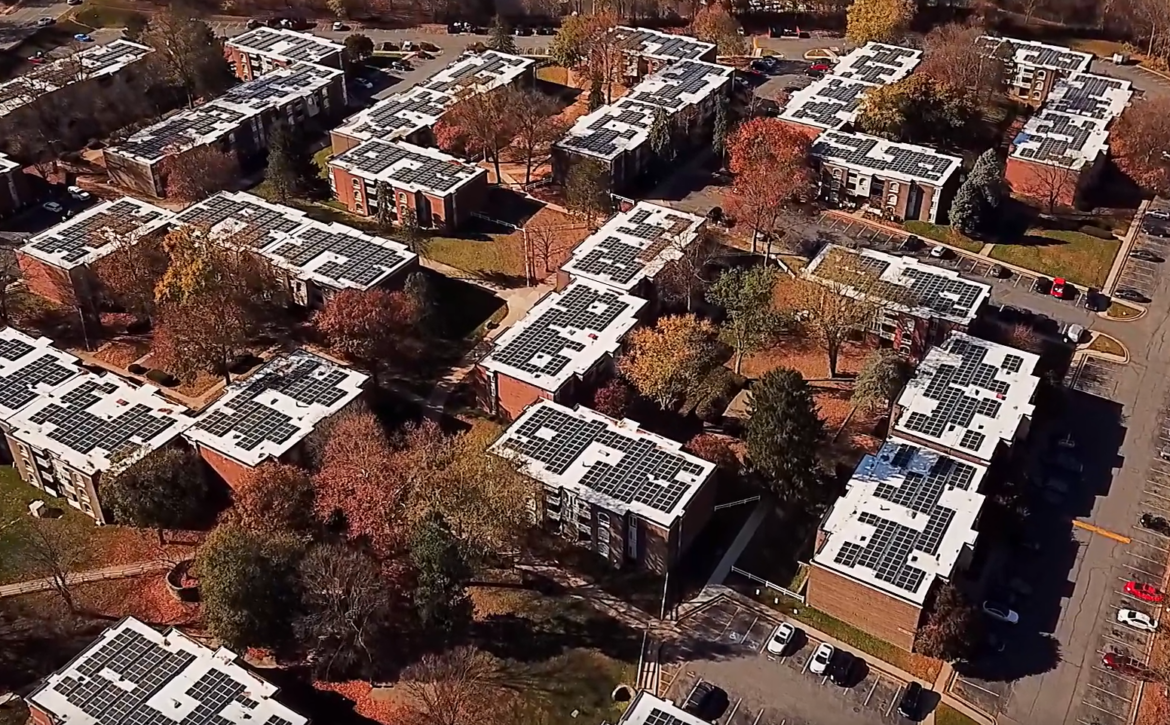
SES is excited to have completed the successful installation and launch of the first privately owned resilience hub in Montgomery County at Hampshire Towers apartments. Equipped with state-of-the-art technology and resources, this hub was custom-designed with and for the local community. It will serve as a vital resource in times of need, providing essential support to residents and the surrounding community during emergencies and crises.
Hampshire Towers Resilience Hub includes electric HVAC systems, a 159 kW solar system, and 400 kWh of energy storage. During an emergency, resilience hubs are an essential resource. Hampshire Towers in Montgomery County Maryland is now a community-serving facility that can provide support to residents and the surrounding community, including the Red Cross, before, during, or after a natural disaster or emergency. Hampshire Towers will now be a central point for gathering, information sharing, accessing resources, supporting, and providing relief to first responders.
The Montgomery County GreenBank provided a $4.5 million construction loan, Montgomery County DHCA contributed $6 million, and Hampshire Towers ownership contributed $9 million. The solar system offsets approximately $25,000 in energy costs annually and generates $5,000 in SREC revenue for Hampshire Towers. The solar PV system will mitigate 130 metric tons of greenhouse gas emissions per year and produce a positive net cash flow for the property that helps maintain the affordability of residents’ energy costs for years to come.
Environmental Impact:
The project will decrease natural gas use by 37,292 kWh/year and mitigate 138 metric tons of GHG emissions annually. It will also provide a total of $164,545 in savings per year from lower energy and maintenance expenses while improving the quality of life for the residents. We are proud to be at the forefront of developing sustainable, solar solutions for Montgomery County and beyond. Congratulations and heartfelt thanks to all our partners and stakeholders who made this milestone possible: Maryland Energy Administration, Sandy Spring Bank, Era Building Solutions, New York City Energy Efficiency Corporation, and the Montgomery County Department of Environmental Protection.
We extend special thanks to Hampshire Towers ownership, Orlo Properties, for their visionary leadership in embracing clean energy and their commitment to a sustainable future for all!