Contact Us Today!

Solar Energy Services
1514 Jabez Run
Millersville, Maryland 21108

info@solarsaves.net

410.923.6090

Category: Residential

Read More

Navigating the Solar Project Lifecycle

Solar projects move through many stages to go from someone’s interest to a functional and activated system. Depending on the location and type of project – for example, battery storage, solar green roof, or new construction – the project stages can look a little different and take different amounts of time. SES frequently contracts directly with homeowners and building owners, but we also get contracted as a sub by general contractors, roofers, electricians, architects, solar developers, and specialty homebuilders. Because of this variety of customer type, we manage a diverse set of requirements across our portfolio in all project stages.

The Sales Cycle

Regardless of the type of customer, the beginning of every project is the same: positive contact between a prospect and SES. A prospect is a person or entity interested in getting solar from us. They might have heard about SES from an advertisement, online search, or neighbor. However they found us, the new prospect gets assigned to an SES sales representative and the project begins!

During the Sales Cycle, the sales rep begins developing a system that balances SES’s offerings with the customer’s unique needs. They must consider many factors – What is the customer’s budget? Will they need their roof replaced prior to an install? Do they want power during an outage? Are they planning to get an EV? What incentives are they eligible for? – to name just a few! Under certain conditions, the rep may request a pre-sale site visit to get extra details on the project to help price the job properly. Typically, the Design team creates a layout that works with the constraints provided, and the rep develops a proposal to present to the prospective customer.

The prospect and the sales rep may go through several proposal versions. Not every project will turn into an installation, but we sometimes have prospects return after months or even years to pick up on a project that was started in the Sales Cycle. When a customer accepts a proposal, they sign a contract that dictates specifications (e.g., module quantity) and scope (e.g., trenching), pay a deposit, and the Sales Cycle closes. At this point, the prospect becomes an SES customer, and Sales hands off the project to Operations.

Operational Development

While a contract includes a preliminary layout, it’s Operations’ job to establish the design that will make it through the hurdles of engineering, utility approval, county approval, material availability, and installation feasibility. The first step is to survey the site to get electrical information, photos, measurements, and in some cases, drone imagery.

Most projects go through at least three design phases: 30% design, which includes an updated layout and single line drawing; 60% design, which incorporates stringing information, structural drawings, racking engineering, and electrical calculations; and 90% design, which is when we get our 60% drawings stamped by professional structural and electrical engineers. In most counties, even the smallest 3kW system will need to go through all three of these design phases to make it to the next stage of the project: Permissions.

Solar installations need permission from both the customer’s utility (for interconnection) and their county (for building and electrical permits) before we’re allowed to start construction. One or both may require changes to our design before they’ll grant approval. This might be the case if they’ve changed which version of the National Electric Code (NEC) they’re enforcing, or they may catch a calculation error. Once we have “Approval to Install” (“ATI”) from the utility and approved permits from the county, which can sometimes take weeks or even months, we have the green light to proceed with construction, from an official permissions standpoint.

Construction

In preparation for construction, we order and set aside the major equipment (modules, racking, inverters, RSDs) and start making concrete plans for safety, access, load-up, installation tasks, manpower, interconnection, schedule, and any specialty balance of system (BOS) equipment. These plans are usually dynamic, as they depend on the overall production schedule, contractual timing requirements, customer and crew availability, and material lead times. The Operations team holds an internal Install Strategy Meeting, and there may be one or more pre-construction site visits before we mobilize.

Once the stars align, construction can begin. The DC Field team is responsible for the installation of the racking system, microinverters or RSDs, DC conduit, DC wiring, and modules. The AC Field team is responsible for the installation of inverters or combiners, AC conduit, AC wiring, AC tie-in, storage systems (if applicable), and setting up

communications. Like the other stages of the project, this is a major simplification of what it really takes to build a solar project! Many real-time factors can shift the work that’s required, but the result of the Construction stage is an installation that is ready for inspections.

Closeout

Once both the DC-side and AC-side of the installation is complete, the project must pass electrical and building inspections. After the project passes the electrical inspection, we apply for the utility to interconnect the system. This can take several weeks, so in the meantime we complete any punchlist items and perform our system testing, which includes the SES and manufacturer’s commissioning checklists, insulation resistance testing for large conductors, and inverter proving. We also compile the owner’s manual, which includes as-built drawings, system specifications, and warranty information. We also begin setting customers up for their federal, state, and local incentives.

After reviewing our application and inspection pass documentation, the utility will change the customer’s meter into a net meter and issue “Permission to Operate”, also called “PTO”. This official notice triggers us to activate the system and verify that everything is producing as expected on the monitoring portal. Once the system is producing and the customer has paid in full, the project lifecycle endsâ€Ķ

The Cycle Continues

â€Ķuntil the customer refers SES to their neighbor and the cycle begins again!

Read More

Solar + Battery Storage provides homeowners and business owners with much-needed energy independence.

Solar + Battery Storage provides homeowners and business owners with much-needed energy independence in the face of disruptions of an aging power grid. When your solar panels collect energy from the sun, the energy is then sent to your inverter, which converts that power into usable AC electricity. The AC electricity powers your lights, appliances, and devices. But what happens when you experience an outage? Here’s where your battery comes into play: this is when you will begin to pull electricity from your battery until power is restored. The solar will then recharge the battery until it is full in preparation for another outage. Depending on your battery and energy usage, you can have a whole-home backup, or you can just target your essential loads. Pairing solar panels with a battery ensures your home or business stays operational during a grid outage, providing peace of mind and reducing reliance on an uncertain grid. Now, let’s get down to the details.

Grid-Tied Solar Systems

Grid-tied solar systems are a great way to save money and create an energy-efficient home. These are by far the most common solar energy systems in our region. Without an integrated battery, these systems automatically shut off during a grid outage to prevent back-feeding electricity into the grid, which can be dangerous for utility workers. When your grid-tied system is paired with a battery, it will automatically ‘island,’ (disconnect from the grid) allowing you to operate your own micro-grid during the outage, leveraging the value of both your solar system and your battery to carry you through. When you aren’t experiencing an outage, under normal operating conditions, your battery will stay fully charged by the solar, with any excess energy sent back to the grid to be consumed by the nearest load (likely one of your neighbors), giving you kWh credits for any export of energy. Net Metering in our region allows you to receive full retail credit on your utility bill for every kWh you send to the grid.

Off-Grid Solar Systems

Off-grid solar power operates independently from the electricity grid. It is less common in our region and is typically used in remote areas where grid connectivity is cost prohibitive. These solar systems are completely self-sufficient, relying on solar panels to capture energy from the sun, to be both stored in on-site batteries and used in real time. A well-designed system with the right technology ensures dependable electricity through the use of only renewable energy resources.

How to Choose the Right Solar Battery

Each solar system is unique, and your battery system is no exception. Selecting the ideal battery for your home or business isn’t just about technical specifications. Our experts will guide you in choosing a solution that aligns with your unique needs, considering factors like your lifestyle, energy consumption, essential appliances, existing electrical system, and budget. We’ll walk you through our top 3 solar-battery picks.

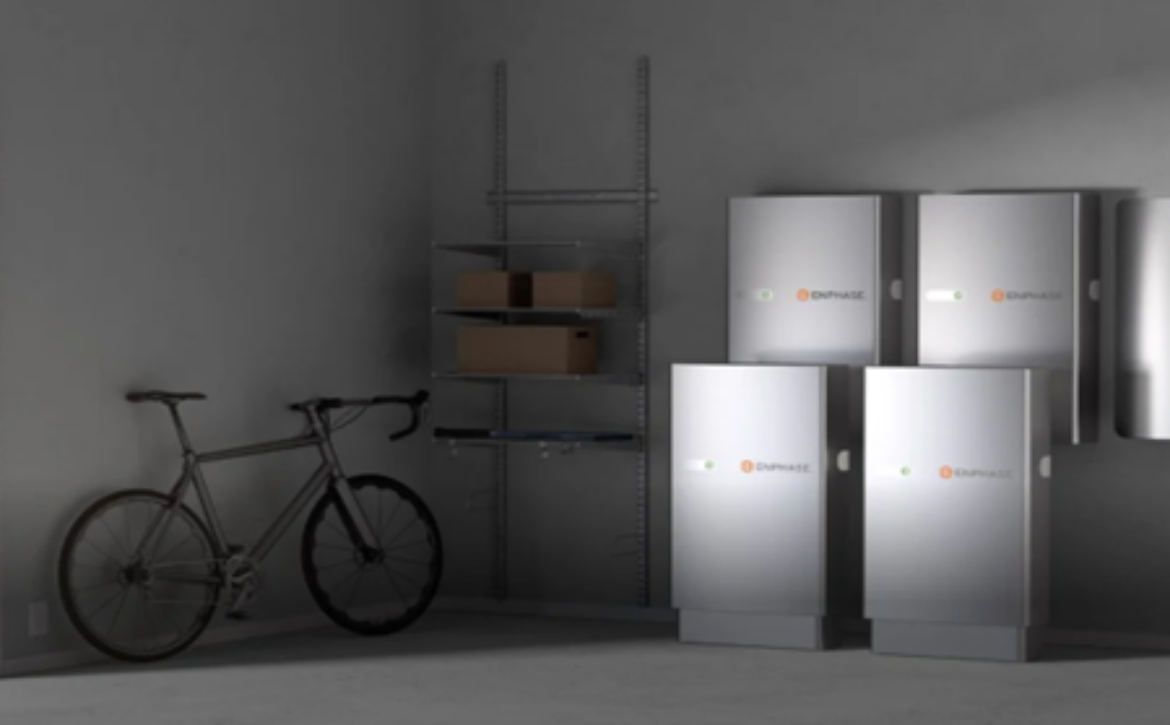
Enphase IQ8 5P

The IQ8 5P from Enphase allows homeowners to start and run more power-hungry appliances during an outage than ever before (think refrigerators, freezers, sump pumps, well pumps, and water heaters). These batteries are National Electrical Manufacturers Association (NEMA) Type 3R rated, meaning that they can withstand and will operate in extreme weather conditions including heavy rain, sleet, snow, and ice.

Technical Specifications:

  • Capacity: 5 kWh
  • Peak Power: 3.84 kW continuous / 7.68 peak
  • Chemistry: Lithium-ion LFP (Lithium Iron Phosphate)
  • Efficiency: Up to 97%

Key Features:

  • Modular design for scalable storage solutions (add more batteries as your energy needs grow over time)!
  • Individual monitoring and control of each battery
  • Built-in microinverters for optimal energy production
  • Compatible with Enphase solar systems
  • Seamless generator support during extended outages
  • 15-year warranty

Tesla Powerwall 3

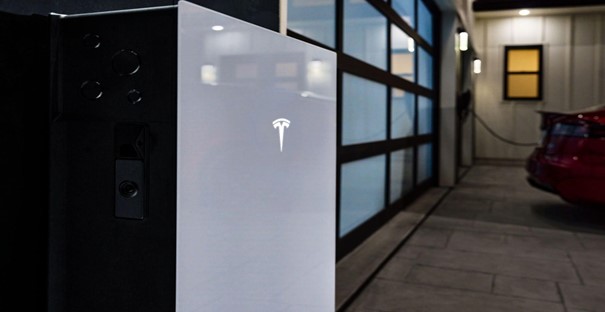
The Powerwall 3 is a streamlined, all-in-one solution for energy storage. Its integrated design reduces complexity, improves efficiency, and simplifies installation and management. With a single monitoring platform, you can easily track solar production, consumption, EV charging, and battery usage. Powerwall 3’s compact size and integrated solar inverter ensure reliable whole-home backup, even in harsh conditions. In the event of a power outage, it seamlessly transitions your home to stored energy, providing a continuous and uninterrupted power supply.

Technical Specifications:

  • Capacity: 13.4 kWh
  • Peak Power: 11.5 kW continuous / 30 kW peak
  • Chemistry:  Lithium-ion LFP (Lithium Iron Phosphate)
  • Efficiency: Up to 97.5%

Key Features:

  • Integrated inverter for grid-tied and backup power capabilities
  • Advanced thermal management system
  • Remote monitoring and control via mobile app
  • Compatible with most major solar inverters
  • Modular design for scalable storage solutions
  • 10-year warranty

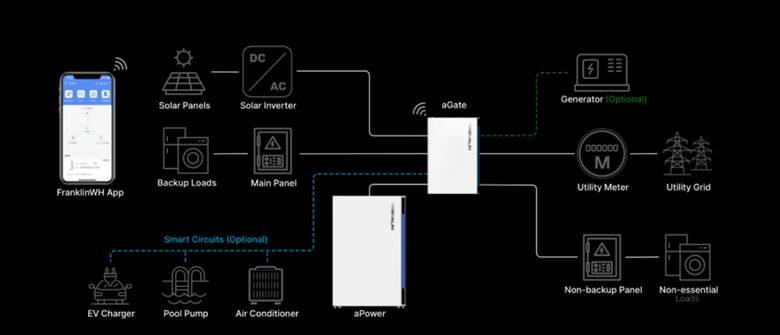
Franklin WH aPower Battery + aGate Energy Management

aPower paired with aGate by Franklin WH, a robust home energy battery solution, offers scalable storage as well. aPower batteries can be scaled up to 15 units per aGate, offering a remarkable 204 kWh of storage to meet even the most demanding home energy needs. As a robust battery, a single aPower unit is powerful enough to start a 4-ton air conditioner.torage. aPower batteries can be scaled up to 15 units per aGate, providing up to 204 kWh of storage.

Technical Specifications:

  • Capacity: 13.6 kWh per unit
  • Peak Power: 5 kW continuous / 10 kW peak
  • Chemistry: Lithium-ion LFP
  • Efficiency: Up to 95%

Key Features:

  • Customizable storage options to suit different needs
  • Integrated battery management system for safety and performance
  • Compatibility with various solar inverters
  • Competitive pricing with a 12-year warranty

Federal Tax Credit for Solar Batteries

The solar battery tax credit is part of the federal solar tax credit, a long-standing incentive for solar panel installation. In 2022, the solar tax credit was expanded to include both stand-alone and solar paired with battery storage as part of the Inflation Reduction Act. The new and improved tax credit is often referred to as the solar battery tax credit when it’s being applied to battery storage. This credit can be combined with the federal solar tax credit to maximize savings and can stand alone, without solar. There is no maximum amount for claiming your tax credit.

MEA – Maryland Energy Storage Income Tax Credit


The Maryland Energy Administration Storage Income Tax Credit is available to residential and commercial taxpayers who have installed an energy storage system on their property in Maryland. Tax credit certificates are awarded on a first come, first served basis. We are currently awaiting 2025 program information from MEA.
Tax Credit Calculations
Energy storage tax credit certificates are calculated differently for systems installed on residential and commercial properties. A tax credit certificate is calculated as the lower amount of:
● 30 percent of the total installed costs of the energy storage system; or,
● $5,000 for an energy storage system installed on a residential property; or,
● $150,000 for an energy storage system installed on a commercial property.

Total Installed Costs

To calculate the Total Installed Costs of the energy storage installation, MEA will take the sum of the line items listed below from your contract and invoicing documents. MEA will then subtract any discounts offered by the installation contractor from the Total Installed Costs before calculating the energy storage tax credit certificate. It is essential that your installation contractor provide a clear invoice articulating the costs of each component of the system.

● Cost of the Energy Storage System (e.g., Home Battery System)
● Cost of Electrical Work/Equipment (e.g., Electrical Gateway)
● Cost of Installation and Labor
● Cost of Required Permits (e.g., Building, Electrical, and Occupancy Use Permits)
● Maryland Sales and Use Tax

Solar batteries offer a powerful solution for energy independence, resilience, and peace of mind. As the local clean energy experts, we are committed to dispelling misinformation and educating the community on clean energy solutions. Our team of experts are here to answer any and all questions you may have about solar and battery storage. Ready to take the next steps towards a sustainable future? Contact Solar Energy Services, Inc. today for a personalized consultation and learn how solar energy and battery storage can benefit your home or business.

Solar is Booming in Washington DC

Washington DC has been a leader in solar development for many years.  In the last 12 years, DC legislators have set aggressive targets, helped to streamline solar permitting, introduced a solar access rights law, and passed a landmark community solar bill to increase access to solar for those without an available sunny rooftop.   Many of these policies include mechanisms to help bring the benefits of solar to communities of low and moderate income.  The collaboration between the solar industry and DC policymakers has helped to build a robust market where solar installations are happening throughout the city, from downtown office buildings to churches, warehouses and residential rooftops across the city.   These policies and the resulting private investments are creating good jobs in the District and reduced energy costs for many of its residents.

Double Down

Since solar and clean energy have been delivering in DC, the stakeholders decided they wanted a more ambitious goal.  In the summer of 2018 the District started on a path to double down with their commitment to renewable energy by proposing the most aggressive renewable energy target in the country when compared to other state policies.  The new goal calls for 100% clean energy (5.5% solar) by the year 2032, with 10% solar by 2041.  Hawaii and California are the only other states that have 100% goals, but both of those targets are positioned for 2045, quite a few years later than DC. 

Other Benefits of the legislation

In addition to doubling the renewable energy target, the proposed legislation would provide a few more benefits to solar advocates.  The bill:

  1. Limits geographic eligibility over time to concentrate the solar development in the District or on the District’s grid
  2. Pulls the current solar carve-out schedule forward by two years to increase SREC demand
  3. Extends the solar carve-out from 5.5% in 2032 to 10% by 2041
  4. Addresses specifics about previously contracted (“grandfathered”) load that is exempted from the newest RPS
  5. Includes transparency requirements on the energy suppliers to provide insight into the exempted load and associated time periods
  6. Modifies Alternative Compliance Payment (ACP) schedules to require $300 ACPs through 2041
  7. Increases the shelf-life of an SREC from three to five years, increasing SREC price liquidity and stability.
  8. Introduces various reporting requirements on the Public Service Commission in order to keep the Council and the Public apprised of the progress of renewable energy development.

We’re in the Home Stretch

The Clean Energy DC Omnibus Amendment Act of 2018 was introduced in July 2018 and made its way through the Council over the fall with hearings and two unanimous votes of support on November 27th and December 18th.  In January, the bill was submitted to Mayor Bowser for her signature and she obliged on January 18thClick here to read the bill“.   The remaining hurdle is for approval by the US Congress within 30 legislative days.  The only way that Congress can stop this legislation is with a joint resolution and the President’s signature.  As a result, passage into law is considered by most to be inevitable and in fact we are seeing market pricing for SRECs responding accordingly.

Thank your Legislators

So now that the law is almost passed, it is time to prepare to deliver.  The industry has a lot of solar to build and we’re working hard at that.  As a solar advocate who cares about renewable energy in DC, please consider taking a few moments to call or write to your Councilmember to thank them for their support of Clean Energy DC Omnibus Amendment Act of 2018.  It’s always important to show our gratitude.

Thank you for your support of solar!

Buy American and Save

For the month of February SES is offering $1000 off of any solar system that includes US Manufactured Panels.  That’s right, support US manufacturing and Save!  All you have to do is reference this offer during or before your site visit.

Here’s 5 More Reasons Why:

1.    Provides Jobs

The Solar Industry’s growth and inherent job creation is no secret, we are leading the pack among every other industry nationwide. Most of these jobs are being created on the installation side, but we also need to support the rest of the value chain.

2.    American Independence Includes Energy Independence

We as Americans have pride in our nation and in our independence. By generating our energy locally, with renewable resources, and US products, we strengthen our country and our independence, both individually and collectively as Americans.

3.    Do It for The Environment

Current technologies allow manufacturers in the US to support a greener, cleaner solar manufacturing process. If we invest in American-made products, we strengthen our manufacturing base, support US jobs, while insuring  that we are doing our part to contribute to a cleaner environment for ourselves, and the generations to come. Also, by reducing the need to ship overseas, the net carbon footprint is much lower

4.    We Control Labor Standards, They Don’t

The US is a leader in fair labor and safety standards. With minimum wage and safety regulations in the workplace being upheld, you can be sure that your panels are made by people who are being supported and treated fairly in the workplace.

5.    Guaranteed Quality of Goods

The term “Made in the USA” speaks of quality, excellent craftsmanship and a superior product. With a lower cost of labor abroad, many factories rely on fabrication and assembly processes by hand. This introduces higher rates of  failure when compared to the American Standard of automated soldering and assembly. While panel quality continues to improve in the aggregate, US products remain the leaders in quality and performance.  Price tags are slightly higher for Made in USA products, but you find true value among longevity and performance.

Solar Plus Storage is Ready for Prime-Time Backup Power for your Home

As we’ve seen the cost of solar drop rapidly in the last ten years (more than 80%), we continued to endure those naysayers in the distance arguing that “no matter how cheap you make solar; much like wind, it will never dominate the energy landscape because of intermittency.” It’s hard to believe people still say “Never” in the context of technology? That term only provokes our great American drive and ingenuity, which continues to deliver. Witness electric storage costs have dropped 80% in the last eight years, outpacing the dramatic solar cost reductions!

Battery technology today

Today, electric batteries continue to back up solar in more and more markets every year. Batteries are giving solar system owners a lot more control and choice about energy independence, while giving grid operators a game changing tool to help manage the modern grid with greater economic efficiency. We’ll talk more about the how and why, later in this post.

Storage market is heating up

So far SES has contracted for 7 battery installs already this year in Maryland, up dramatically from 2017. The residential solar plus storage market has begun to take off in many markets. In fact, the preferred battery suppliers were out of stock for more than 4 months this year, both from increased demand to complement solar projects, but also due to the soaring demand increase for Electric Vehicles (EVs) that use the same battery technologies.

Storage is like bacon

Why is storage so valuable? One of my favorite energy experts, Katherine Hamilton (https://38northsolutions.com/team/bios/) once said that “storage is like bacon, it makes everything better.” Storage has almost a dozen value streams that can be monetized now or in the future. The two biggest and most obvious value streams are that it can provide extra capacity in times of high demand, and it can provide extra demand in times of excess capacity. In both cases, it provides stabilizing value to the grid and more efficient use of generating assets.

A testament to the value of storage on the grid was seen several years ago when the California Public Utilities Commission required utilities to procure a minimum amount of storage. Not only did the major utilities comply, they all procured more storage than mandated. They are well aware, storage helps them modulate an increasingly dynamic and decentralized grid.

Residential Solar Panels Anne Arundel County MD

Why should I consider solar plus storage for my home?

If you deploy solar along with your energy storage solution, you can utilize the same federal tax benefits as you do for solar, namely the 30% investment tax credit. In Maryland, you are eligible for an income tax credit on the storage portion of the system, in addition to the other state solar incentives (https://energy.maryland.gov/business/Pages/EnergyStorage.aspx). As a result, the economics in Maryland for residential solar + storage are much improved from a few years ago.

The main reason our residential customers are deploying energy storage is for backup power during a grid outage. This is typically done by way of an essential loads subpanel in their electric system. SES often installs these subpanels as part of our solar + storage project.

Another factor driving this trend is a residential customer’s desire to position themselves to cut the cord in the future, if the utility relationship becomes unappealing or uneconomical for them.

Lastly, future changes to electric rate design and/or net metering policy, could present solar + storage owners the ability to increase their savings or even generate revenue from the services that their frequently-idle storage can provide.

Are you building a new home and want to be sure it is ready for the energy architecture of the future? It’s easier than you think. Ask your builder or electrician to insure you have an essential loads subpanel (to use with electric battery storage, or possibly a generator). Secondly, request they install an empty (capped) electrical conduit from attic to electric room for us to easily add your solar energy conducting wire in the future.

Please see Roger Perry’s technical writeup on residential storage applications recently implemented by SES.

What has brought about this market opportunity?

Electric storage has long been an essential part of any true off-grid solar/wind application and this is where the earliest developments have taken place. As solar began to penetrate the grid in the last 10 years, there has been a lot of R&D investment in this future “holy grail” of renewable energy development. The investment is now paying off.

Storage broke into the US grid-tied market about five years ago. In the case of Hawaii, it was mostly a market driven change. Extremely expensive power, a grid congested with rapid solar growth, denials and delays of solar interconnection applications, and abundant sunshine, all contributed to the new paradigm. This resulted in economics that justified a certain segment of residential customers in Hawaii to cut the cord and embrace storage as a long-term solution. This sent an alarming message to utilities around the world: You better embrace these changes or plan to go the way of the buggy whip!

At about the same time, California’s PUC mandated a specific quantity of storage on the grid, much of it behind the meter. The utilities went on to exceed that mandate in the first auction and later in 2017, the target was increased again, with little to no resistance. In the past year, we’ve seen California utilities choose new battery storage over new gas fired peaker plants to meet peak loads in three separate cases. This is a tremendous validation of the economics of storage, particularly in an age of record low natural gas prices.

What’s ahead for energy storage?

The horse is out of the barn. Distributed energy generation combined with storage, will be the foundation of the future electric grid. The role that storage will play in this transformation will be enormous at the macro level, but somewhat uncertain at the micro level due to regulatory policy, incentives, and local market conditions.

We should expect to see strong storage growth in markets with the following attributes:

  • Places where local or state incentives are promoting storage – Maryland is one of them.
  • Markets where system owners can capture supplemental revenue from their storage investments (Our grid operator, PJM has piloted bundling distributed storage as a revenue generating resource for storage system owners)
  • Markets with high electric rates or Time of Use (TOU) rates.
  • Markets where electric “demand charges” represent a large cost for commercial and industrial (C&I) customers. This is because storage can dramatically lower a building’s electricity demand profile, and thus add energy bill relief to a portion of the bill where solar has had limited impact.
  • Microgrids are increasingly popular, particularly with campus style environments and military installations. These applications will increase storage demand and further drive down costs through scale and experience.

Next steps

Be sure to contact SES if you are interested in solar + storage. We will be happy to design a system that is customized to your needs. As always, we’ll provide you all the support you need to capture the Maryland solar grant and the storage tax credit (which has a limited budget) so contact us right away.

Practical Considerations for a Battery System

[vc_row][vc_column][vc_column_text]

As long as I’ve been doing solar, people have been asking about batteries. The response has always been “yes, we can do them, but it will cost a lot”. That usually ended the conversation.

One question to ask is “why do you want batteries?” Do you lose power frequently? If not, a portable generator will keep your refrigerator, freezer, computers, tv and some lights going. Downsides are; noise, fumes, refueling, having to run extension cords to where needed and putting everything away when power comes back. Not too bad once in a while and it’s very cost effective. Just hope you aren’t out of town when power goes out. There is nothing automatic about this set-up.

If you lose power often and don’t want to do the portable generator dance every few months, you can get a permanently installed generator with automatic start. These are close to $5000 installed for the ones that will run most of your house when the power goes out (a larger one can be installed for a few thousand more that will run everything). This is what hospitals and critical buildings use. Power goes out, the generator starts automatically and powers the house with only a momentary loss of electricity.

Downsides? Noisy, they need maintenance and, if propane or diesel powered, they need the fuel tanks to be kept filled.

What if you lose power often, don’t want the noise, maintenance and fuel expense of a generator? What if you want a system that is environmentally friendly, will turn on automatically, is silent, will run pretty much nonstop without refueling? You should look into installing a battery back-up system connected with a solar system.

What are the downsides? Well, cost is one. While not as expensive as in years past, battery back-up systems are still costly. Compared to a permanently installed generator, battery backups tend to run few thousand more. Ask your accountant but you may be able to take the 30% solar tax credit on the additional cost of the batteries. This brings the price in line with a generator.

Another downside is you can’t run everything in your house. Things a battery cannot run for any length of time are air conditioners or heat pumps, electric water heaters, electric dryer or electric ranges. What they can run are gas or solar water heaters, gas or oil boilers, refrigerators, freezers, lights, tvs, computers, fans and pretty much everything else. Well pumps are on the edge depending on how efficient they are. While running a modern variable speed well pump is not an issue, older well pumps require a large startup current which can be too much for the battery to handle. We are about to install a “soft start” control to try and reduce a well pumps surge demand for one of our customers but the jury is still out.

We are now installing LG Chem lithium Ion batteries. LI batteries have a lot of advantages over the old lead acid batteries. The big advantage they have is they are not damaged by running them dead, whereas lead acid batteries do not like being discharged to less than 50% of charge, a Lithium Ion battery will give you it’s full rating. The one we use is rated for 10 Kilowatthour (KWH). A lead acid battery would need to be rated at 20 KHW to achieve the same capacity. Lithium batteries are also much lighter (not that the customer will have to move them) and can be charged much faster.

The big downsize of LI batteries is the upfront cost compared to LA but they will last much, much longer and they are maintenance free.

In a future blog I will discuss the two different ways to interface a solar system with the batteries, AC coupled and DC coupled and the pros and cons of each as well as what a 10 KWH battery will give you as far as run times for various appliances. I’ll also talk about how a battery system can be retrofitted to your existing solar system.[/vc_column_text][/vc_column][/vc_row]

Incentives for Electric and Hybrid Cars in DC

[vc_row][vc_column][vc_column_text]

Washington DC’s government is encouraging the ownership of electric and hybrid cars with incentives that will save you time and money. For one, if you own an electric vehicle, you are exempt from emissions testing. If your car emits nothing, there is nothing to test. You simply need to register it with the DMV in DC. And if your car is a hybrid that is both electric and gas powered, you only need to pass a smog test. For questions about this, you can call the DC Department of Motor Vehicles at (202) 737-4404.

Fuel Efficient Cars get Reduced Registration Fees

You can also qualify for a discount on the first-time vehicle registration for a qualifying electric, hybrid or clean fuel vehicle. Their rules state that your car must get at least 40 miles per gallon in city driving. Check www.fueleconomy.gov to see how your car rates. You also must be the original owner of the car. If your car is used, you are eligible for the excise tax exemption. This exemption is the tax you pay upon purchase of a vehicle. So, the exemption can be a nice savings for you.

You might also qualify for federal tax credits. Eligible cars include electric, hybrid, plug-in hybrids, diesels and alternative fuel vehicles. Ask your accountant about how this might benefit you. And another benefit is that your insurance company might offer a discount. If they don’t, you might want to call around to find a carrier that does. These savings can really add up.

And finally, if your business has a fleet of 10 or more clean fuel automobiles, you can qualify for an exemption to the HOV lane. Again, call the DC DMV at (202) 737-4404 to find out about this benefit. Going electric and fuel efficient will put you in the fast lane in so many ways.

And, of course, we are always available to help you power your electric car with solar panels at your home, in your community or at your business. Please contact us if you have questions about generating most, or all, of your energy from solar.

[/vc_column_text][/vc_column][/vc_row]

Peters’ Journey to Net Zero

Solar Service,Home Solar PanelsWhat Net Zero Meant for Us? Our Severna Park based, four-person family was looking to offset some of our home’s dirty energy, but we really did not have an expectation we could offset it all, but we had to start somewhere. We took our first step shortly after I joined the solar industry in 2008.

Low Hanging Fruit. In February 2009, we installed a 120-square foot solar water heating system to offset most of our water heating, and a small portion of our space heating for the first floor of our home. We saw big savings from this 3-panel system right away. Ever since, I enjoy the act of turning off the back-up water heating in April and leaving it off until almost October. For us, offsetting a dirty and expensive oil-fired boiler was the obvious low hanging fruit. We would later convert that remaining load to natural gas when the utility extended the pipeline to our home.

Solar Electric (PV) With the rest of the heat, A/C, and appliances all running off electric, it was time to look at the next opportunity. A few years later, when budget allowed, we decided to add a 5 kW solar PV system to our second story roof which faces SSE. My best determination was that we offset just over 40% of our electric load with that PV system. We were happy, but knew we’d want to find a way to get to NetZero eventually. , . I began to evaluate the remaining rooftops and consider what it would take to get us there. Solar panel efficiencies had improved a lot over the past several years so this reduced the remaining roof space we’d need to hit our goal

Phase 2 (PV). In the spring of 2016 we finished filling the balance of the south roof with some slightly higher wattage panels. As part of the same expansion, we added 24 relatively high efficiency panels to the E/W, low slope, rooftop of our one-story garage. We now had a total of 6.6 kW Equivalent of solar thermal and 13.8 kW of PV.

Not There Yetâ€Ķ.We almost tripled our PV with the last upgrade and according to my calculations, this would get us to NetZero electricity. We’d know for sure by April, the annual true-up time frame for netmetering with BGE. When April 2017 came around, we were disappointed to come up a bit short (unfortunately, with a couple teenagers in the house, my usage predictions were a little off). Where do we go from here? I was not ready to put panels on the north roof, there had to be something available to us on the demand side.

Oops – More Low Hanging Fruitâ€ĶOne thing about Energy Efficiency, there’s always more opportunity. I had changed out many bulbs to LED over the prior several years, mostly through attrition, but I had not replaced any of the more than 2 dozen canister lights we had throughout the ceiling upstairs and down. Not only were these lights very inefficient, but the heat they generated in the summer was just adding to our air-conditioning load. We found the LED replacements on sale and replaced them all, as well as the remaining few incandescent lights in the house.

Commercial Solar Energy,Solar ServiceEureka. we have arrived!… In April of 2018 we received a $46 check from BGE for the annual overage from solar. With the kids heading off to college soon and a new refrigerator around the corner, I’m confident our checks from BGE will be getting bigger for the near future. At least until we purchase an electric carâ€Ķ

DC Property Owners: Big Hot Water load = Big Solar Incentives

[vc_row][vc_column][vc_column_text]Commercial Solar Service, Annapolis MD

A growing number of building owners, developers and condo associations in the District of Columbia have come to realize that their building happens to be located in the most solar-friendly city in the USA .  Solar contractors, investors and financing vehicles are falling over each other to get solar panels on District roofs and start generating  the lucrative solar renewable energy credits (SRECs).   Whether via Direct Purchase, or $0 solar leases – SRECs are undoubtedly the reason for the solar season in DC (more to follow on those below).

However, before you sign on the dotted line and fill your roof with a 25-year solar PV (electric) system, as offered by 9 out of 10 solar professionals, make sure that you’re not losing the opportunity to vastly increase your return on investment with a Solar Thermal System.

Solar Water Heating Feasibility

The pre-qualification for a Solar Thermal System involves three questions:

  1. Does your building have a substantial, daily (365 day) hot water need? (i.e. apartment building/condos, restaurant, laundry, brewery, health center)
  2. Does your building have a centralized water heating system (as opposed to individual units throughout the building)?
  3. Can the building accommodate additional storage tanks?

If you answered YES to these three questions you really (really) should first consider a Solar Water Heating system either before – or at a minimum – in tandem with, a solar PV system.  (Shopper Beware – unless your solar contact has experience with solar thermal – which many do not – you’re going to have to be prepared to shop further).

What is Solar Water Heating (or Solar Thermal)?

Other than using the sun for energy generation, Solar Water Heating Systems operate entirely differently from their electron-shaking PV counterparts.  These time-tested, technologically mature systems are mechanical in nature and relatively simple.

Moreover, a solar thermal panel is 60 – 70% efficient; whereas a solar PV (electric) panel is typically 17 – 24% efficient.  Therefore, solar thermal panels generate substantially more energy per square foot than PV panels,  monetizing many more SRECs.

Solar Service , Home Solar Panels, Solar Renewable Energy


Let’s Review SRECsâ€Ķ

SRECs (Solar Renewable Energy Credits) – along with the 30% Federal Tax Credit and 100% Year 1 depreciation– are what drive the tremendous economic benefits of solar in Washington DC; one of several jurisdictions that have enacted a Renewable Portfolio Standard requiring that a specific percentage of electricity consumed must come from solar.   Whether residential, commercial, or institutional, each time a solar system generates 1 Megawatt hour of energy – the solar system owner generates 1 SREC.  This SREC is then sold via aggregators to an SREC market where it is bought by competitive energy suppliers to allow them to meet their share of the compliance obligation, or else pay a legislated fine (Alternative Compliance Payment, or ACP) for every SREC they are short.  Washington DC currently generates the highest SREC values in the country, largely due to the fact that DC does not have the real estate to install large solar farms which can rapidly oversupply a market and drive down SREC prices.

How much are SRECs Worth?

Washington DC SRECs are currently trading at $395/SREC.  To provide a frame of reference, a 6000 sq ft rooftop in Washington DC outfitted with a 75kW solar PV (electric) system could generate around 90 SRECs/year (over $35,000/year).   Depending on variables such as system size, corporate tax rate and and project site attributes, this SREC income – combined with a 30% Federal Tax Credit and 100% Year 1 depreciation, typically result in IRR’s between 30% – 60% and a Simple payback of 3 – 5 years.    Assuming solar thermal is applicable, this same roof outfitted with a Solar Thermal System could fit a kWh equivalent of a 150kW+ system, generating 180 SRECs/year – and see an IRR of 50 – 80%, with a simple payback in the 1 – 2 year range.

Solar Service ,Home Solar Panels, Residential Solar PanelsMaintenance

Although Solar PV (electric) clients often opt for an O & M (operations and maintenance) contract through their solar installer, Solar PV Systems  have relatively minor maintenance needs; usually an annual inspection along with ongoing monitoring.    Solar thermal (water heating) requires a little more maintenance including a 3 – 5 yearly service which, at a minimum, includes a replacement of the propylene glycol/energy transfer fluid that can degrade with time.  Nonetheless, the impact of service costs on the overall IRR is relatively small and easily absorbed by the increased SREC income.[/vc_column_text][/vc_column][/vc_row]

A Primer on Solar Power

[vc_row][vc_column][vc_column_text]Did you know that attempts to harness the sun’s power through the development of solar cells dates back to the late 1800’s? I am sure that this, and other information, may be new to our readers. This article will provide you with some basic facts about solar power and solar energy. That way, you can join the conversation, and the renewable energy movement!

  • The first successful solar cell was developed in the early 1950s. It was made of silicon, and able to power small electronic devices. This was hailed as the beginning of a new era of energy resources, even then being acknowledged as having the potential to offer a limitless supply of electricity.
  • The first true application of solar cells could be found in the space program at NASA and in Russia. They were the only ones who could afford this technology in the 1960s.
  • The cost of solar cells continued to decline incrementally, but not so significantly that solar was a common source of energy through the 1970s. But, as the 1980s dawned, and ever since, solar power has insinuated itself into all aspects of life, commercially and residentially.
  • The first solar panels for buildings were developed in the early 1970s. In truth, this initial foray into the potential for large scale residential solar power was actually a solar array built into a rooftop. Panel development followed, as the cost and manufacturing efficiency increased.
  • President Jimmy Carter had solar panels placed on the roof of the White House in 1979. Everyone was getting into the act!
  • Welcome to 2018. Today it is common to find solar-powered cars, solar-powered telecommunications, and even solar-powered aircraft. One car company, renowned for their progressiveness, has incorporated solar panels into the roofs of their vehicles!

But, there’s more! Technology continues to expand the horizons of solar energy, making it affordable and applicable in new ways and new places. For example, it is possible that eventually solar panels on rooftops will be replaced with solar shingles!

Or, consider this, a solar fabric is being finalized that can be attached to houses as a cooling device!

We here at Solar Energy Services are excited about the future applications of this renewable source of energy for personal and commercial uses. You can count on us to utilize our superior knowledge and expertise to your advantage. We look forward to serving you!

[/vc_column_text][/vc_column][/vc_row]