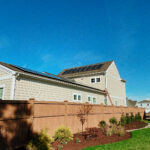

Commercial solar installations give building owners a reliable way to reduce energy costs and stabilize long-term operating expenses.
Energy is one of the largest variable costs in commercial real estate. Solar converts that into a more predictable, controllable line item.
Most systems are designed to generate power during peak daylight hours, when utility rates and demand charges are typically the highest.
How Commercial Solar Systems Reduce Energy Costs
Commercial properties can deploy solar in several ways depending on site conditions:
- Rooftop systems use existing building space to offset grid electricity
- Ground-mount systems maximize production when land is available
- Solar carports turn parking areas into revenue-generating assets
Cost reduction comes from:
- Lower monthly electricity bills
- Reduced peak demand charges
- Long-term rate stability over 25+ years
- Solar Renewable Energy Credits revenue (SRECs) where available
- Net metering credits where available
Key Benefits for Commercial Buildings
From what we’ve seen across projects, the value extends beyond just energy savings.
- High-efficiency energy production aligned with business hours
- Reduced operating expenses, improving net operating income
- Increased property value due to lower risk, higher efficiency, and lower operating costs
- Federal Tax Incentives like the Investment Tax Credit (ITC)
- Accelerated depreciation through MACRS
- Reduced reliance on utility providers
What This Looks Like in Real Projects
At the project level, systems are engineered around actual usage patterns.
Typical ranges:
- Small commercial buildings: 50kW to 150kW
- Mid-size properties: 150kW to 500kW
- Large facilities: 500kW+
Different property types prioritize different outcomes:
- Office buildings align solar production with daytime demand
- Industrial facilities focus on offsetting high energy consumption
- Retail centers often use carports to combine energy and parking improvements
Key Considerations Before Installation
Every commercial solar project starts with a feasibility evaluation.
- Structural Integrity: Roofs must be analyzed to confirm they can support panel loads and mounting systems
- Roof Condition: Older roofs may need repair or replacement before installation
- System Sizing: Based on energy usage, available space, and financial objectives
- Energy Storage: Battery systems can store excess energy for peak demand or backup power
Financial Drivers Behind Commercial Solar Adoption
The ROI conversation is usually what moves projects forward.
- Immediate reduction in utlity expenses
- Federal tax credits reducing upfront cost by a significant percentage
- Depreciation benefits improving cash flow
- Long-term protection against rising energy prices
In many cases, payback periods fall within a few years, depending on incentives and system size.
Why More Commercial Owners Are Moving to Solar
- Energy prices continue trending upward
- Investors are prioritizing efficiency and cost control
- Tenants increasingly value sustainable buildings
- Incentive programs remain strong across many regions
Solar is becoming part of standard asset management, not a niche upgrade.
Take the Next Step
For large-scale, commercial-grade solar projects, organizations can use Solar Energy Services to evaluate, design, and install commercial solar systems tailored to their buildings and financial goals.
Solar Energy Services, Inc. (SES) is equipped to complete projects of all sizes and scopes, from single-site installations to large multi-property portfolios.