
Commercial real estate energy strategy is how property owners gain control over long-term operating costs through on-site generation, efficiency upgrades, and infrastructure planning.
Across Maryland and the broader Mid-Atlantic, this is already happening at the project level. Owners are making practical decisions to stabilize expenses, improve asset performance, and reduce exposure to rising utility rates. These decisions are showing up in both retrofit projects and new construction.
How Energy Strategy Shows Up in Real Projects
On recent projects, energy is being addressed earlier in the planning process and tied more directly to financial performance.
Property owners are:
- Locking in a portion of future energy costs
- Reducing exposure to utility rate increases
- Converting existing building surfaces into energy-producing assets
- Improving predictability in underwriting
Energy is being evaluated alongside capital improvements and long-term asset planning, not treated as a separate line item.
What Energy Strategy Looks Like in Practice
Energy strategy is about controlling long-term operating costs and improving how a property performs over time.
In execution, that typically includes:
- Integrating solar into planned roof replacements or new construction
- Using available land or roof space for on-site generation
- Aligning energy investments with capital improvement cycles
- Designing systems that support long-term operational stability
From a financial standpoint, this creates more predictable expenses and supports stronger asset performance over time.
Case Study: Seneca Village
Project Overview
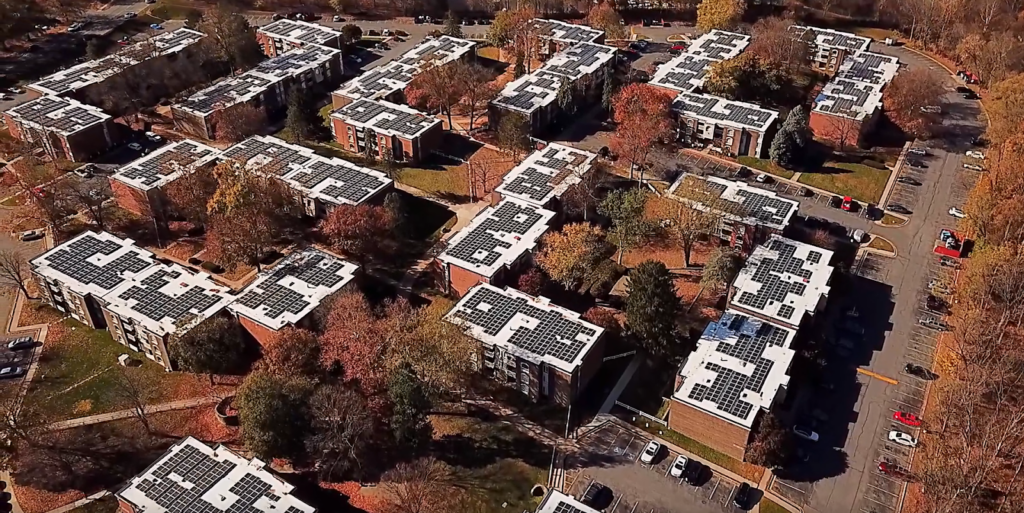
Maryland retrofit project featuring a 2.18 MW rooftop solar system
What Was Implemented
- Reflective roofing system to improve building efficiency
- Rooftop solar array for on-site energy generation
Owner Priorities
- Reduce long-term operating expenses
- Improve building efficiency
- Increase overall asset performance
Execution
The roof replacement was coordinated with the solar installation to maximize system lifespan and avoid future rework. This alignment improved overall project efficiency and return on investment.
Outcome
- Immediate reduction in energy costs through on-site generation
- Improved building performance from reflective roofing
- More predictable long-term operating expenses
This approach allowed the owner to upgrade an existing asset while addressing both cost and performance in a single project.
Case Study: National Shrine of Saint Elizabeth Ann Seton
Project Overview
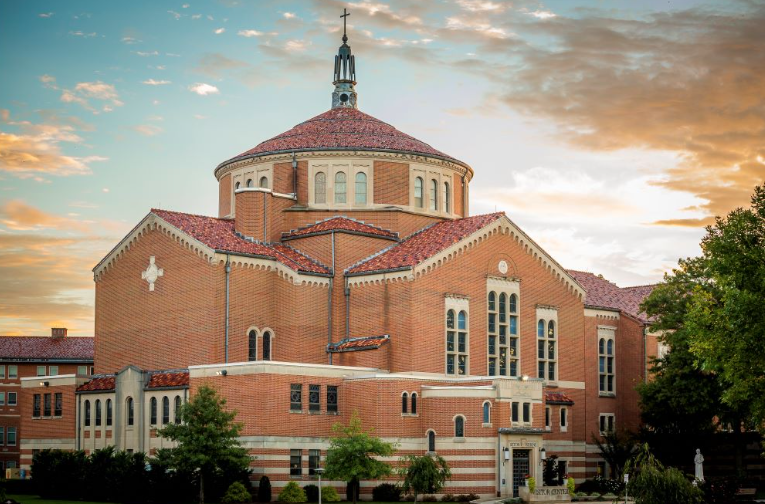
Emmitsburg, Maryland ground-mounted solar project, 2.65 MW system currently under construction in partnership with Mission Energy
What Was Implemented
- Large-scale ground-mounted solar array
- Use of available land for energy production
Owner Priorities
- Offset a significant portion of energy demand
- Create long-term cost stability
- Invest in durable infrastructure
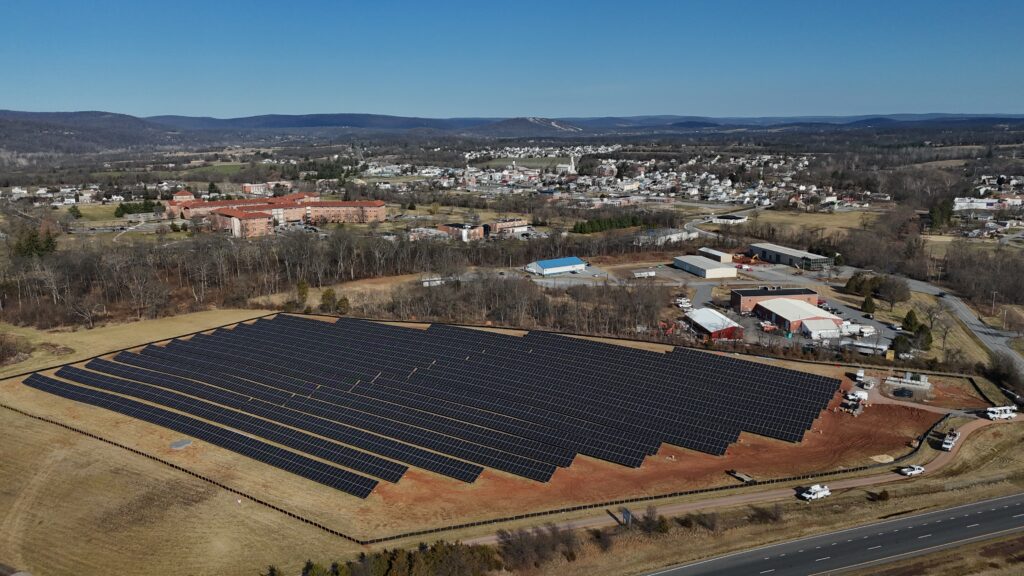
Photo by: Mission Energy Inc.
Execution
The project leverages available land to support a high-output system designed for long-term performance. System design focused on maximizing production to support campus-wide energy needs.
Outcome
- Significant on-site energy generation supporting facility operations
- Reduced reliance on grid-supplied electricity
- Long-term cost stabilization for a large campus environment
For properties with available land, this model converts underutilized space into a high-value, energy-producing asset.
What’s Changing in Conversations With Property Owners
The shift is most noticeable in how conversations start.
Previously, discussions focused on:
- What does solar cost?
- What is the payback period?
Now, property owners are asking:
- How do we stabilize operating costs?
- How exposed are we to future utility increases?
- Where can we create more control within this asset?
These questions lead to different project outcomes. Energy decisions are happening earlier and are more closely tied to financial strategy.
How Property Owners Are Using Solar Today
Property owners are typically using solar in three primary ways:
1. Cost Stabilization
Locking in a portion of energy costs to reduce exposure to rate increases.
2. Asset Optimization
Upgrading existing buildings to improve efficiency while generating energy, as seen in retrofit projects like Seneca Village.
3. Long-Term Infrastructure Planning
Designing systems that support ongoing operational needs, as demonstrated by large-scale projects like the National Shrine.
Each approach directly impacts both financial performance and day-to-day operations.
What This Means for Commercial Property Owners
For owners evaluating their portfolios, the opportunity is tied to existing assets and planned improvements.
A few starting points:
- Which properties have the highest energy cost exposure?
- Where can existing structures support solar installation?
- How does energy factor into long-term financial planning?
- Are there upcoming capital improvements that could align with energy upgrades?
Projects tend to perform best when energy strategy is aligned with planned upgrades, rather than treated as a standalone decision.
Commercial Solar in Maryland and the Mid-Atlantic
Across Maryland, Washington, DC, and Virginia, energy is becoming a consistent part of how commercial properties are evaluated and managed.
It is influencing:
- Capital improvement planning
- Asset repositioning strategies
- Long-term operating cost management
- Tenant expectations and competitiveness
This is already shaping how portfolios are planned and executed across the Mid-Atlantic.
Explore Energy Strategy for Your Portfolio
Solar Energy Services works with property owners, developers, and asset managers across Maryland, Washington, DC, and the Mid-Atlantic to identify where energy strategy can improve asset performance and cost predictability.
Start the conversation and see where this approach fits within your portfolio.